Category: Uncategorized

  • Amazing IPTV vs cable TV Guide 2026

    Amazing IPTV vs cable TV Guide 2026

    IPTV vs cable TV

    IPTV vs cable TV is a debate that continues to evolve as technology advances and consumer preferences shift. In 2026, understanding the nuances between these two dominant television delivery methods is more crucial than ever for making an informed decision about your home entertainment. This comprehensive guide will delve deep into the technical differences, benefits, drawbacks, and future outlook of IPTV vs cable TV, helping you navigate the complex landscape of digital media consumption. We’ll explore everything from picture quality and channel selection to pricing models and flexibility, giving you a clear picture of which service might be best suited for your needs in the coming years. The comparison of IPTV vs cable TV isn’t just about what you watch, but how you watch it, and the overall experience it provides.

    Table of ContentsThe Fundamental Differences: How IPTV vs cable TV WorksChannel Selection and Content Diversity in IPTV vs cable TVPicture Quality, Reliability, and Performance: IPTV vs cable TVCost-Effectiveness and Pricing Models: IPTV vs cable TVAdvanced Features and Interactivity: The Edge of IPTV vs cable TVThe Future Landscape of Entertainment: IPTV vs Cable TV in 2026Choosing the Right Entertainment for You: IPTV vs Cable TVInstallation and Setup: IPTV vs Cable TV SimplicityFAQRelated IPTV Services

    The Fundamental Differences: How IPTV vs cable TV Works

    The core distinction between IPTV and cable TV lies in their transmission methods. Cable TV, a long-standing technology, delivers television signals through coaxial cables. These physical connections transmit a fixed set of channels to your television, requiring a cable box to decode the signals. It’s a broadcast model, where all subscribers receive the same signals simultaneously, regardless of what they are actually watching.

    IPTV, or Internet Protocol Television, operates fundamentally differently. It leverages your internet connection to deliver television content. Think of it like streaming a video on YouTube or Netflix, but for live TV and on-demand programming. The content is broken down into data packets and sent over the internet, allowing for a more interactive and personalized viewing experience. This internet-based delivery is a game-changer when considering the future of home entertainment and the ongoing discussion of IPTV vs cable TV.

    This difference in infrastructure has profound implications for everything from channel availability and interactivity to picture quality and reliability. While cable TV relies on a dedicated, physical network, IPTV harnesses the power and flexibility of the internet. This fundamental divergence shapes the entire user experience and is a key factor in the ongoing debate of IPTV vs cable TV.

    Understanding these technical underpinnings is the first step in appreciating the strengths and weaknesses of each service. As we move further into 2026, the internet’s ubiquity makes IPTV an increasingly attractive alternative, but cable TV still holds its own in certain aspects.

    Channel Selection and Content Diversity in IPTV vs cable TV

    When it comes to channel selection, both IPTV and cable TV offer a vast array of options, but their approaches differ significantly. Cable TV typically provides bundled packages, meaning you subscribe to a set number of channels, often grouped by genre or popularity. While these bundles can be comprehensive, they often include channels you may never watch, leading to higher costs for unused content.

    IPTV, on the other hand, often offers more flexible and customizable channel lineups. Many IPTV providers allow users to subscribe to specific channel packages or even individual channels, giving them greater control over their content and budget. This à la carte approach is a major draw for consumers who want to tailor their viewing experience. The sheer diversity of content available through IPTV, including international channels and niche programming, often surpasses traditional cable offerings, making the choice between IPTV channels and cable even more compelling.

    Furthermore, IPTV often integrates with on-demand services and streaming platforms more seamlessly than cable TV. This means you can access a wider variety of movies, TV shows, and exclusive content directly through your IPTV interface, blurring the lines between traditional television and modern streaming. This content diversity is a significant advantage in the ongoing discussion of IPTV vs cable TV, especially for viewers seeking a broader spectrum of entertainment options.

    The ability to access a global library of content is another compelling aspect of IPTV. While cable TV is largely localized, IPTV can offer channels from around the world, making it an excellent choice for expatriates or those with an interest in international programming. This global reach is a key differentiator when comparing IPTV vs cable TV in a connected world.

    Picture Quality, Reliability, and Performance: IPTV vs cable TV
    IPTV vs cable TV

    Picture quality is a critical factor for any television viewer. In the past, cable TV often held an edge in terms of consistent, high-definition picture quality, especially in areas with robust cable infrastructure. However, with advancements in internet speeds and IPTV technology, this gap has significantly narrowed. Modern IPTV services can deliver stunning 4K and even 8K resolution, provided you have a fast and stable internet connection.

    Reliability is where the distinction between IPTV vs cable TV can become more pronounced. Cable TV, with its dedicated physical lines, is generally less susceptible to internet congestion or outages. While a severe storm can disrupt cable service, it’s often more resilient to common internet fluctuations. IPTV, being internet-dependent, can be affected by slow internet speeds, Wi-Fi issues, or network congestion, leading to buffering or a decrease in picture quality. However, many IPTV providers offer robust infrastructure to minimize these issues, making the debate of IPTV vs cable TV more about your internet service provider than the technology itself.

    Performance in IPTV also extends to features like time-shifting, pause, rewind, and fast-forward live TV, which are often more seamlessly integrated and feature-rich than in traditional cable TV offerings. The interactive nature of IPTV allows for a more personalized and flexible viewing experience, empowering users to control their content consumption. This enhanced performance further strengthens the case for IPTV vs cable TV for many modern viewers.

    Ultimately, the performance of IPTV is directly tied to the quality of your internet service. A high-speed, reliable internet connection is paramount for an optimal IPTV experience. Without it, even the best IPTV service may struggle to deliver the smooth, high-quality content that users expect, making the internet infrastructure a crucial part of the IPTV vs cable TV equation.

    Cost-Effectiveness and Pricing Models: IPTV vs cable TV

    The financial aspect is often a primary consideration when choosing between IPTV vs cable TV. Cable TV traditionally operates on a bundled subscription model, where you pay a fixed monthly fee for a package of channels, often including a set-top box rental. These bundles can sometimes feel expensive, especially if you find yourself paying for numerous channels you never watch. Hidden fees, such as installation charges, equipment rentals, and regulatory fees, can also inflate the overall cost.

    IPTV, on the other hand, often presents a more flexible and potentially cost-effective pricing structure. Many IPTV providers offer tiered subscriptions, allowing you to choose packages based on the number of channels or specific content genres you desire. Some even offer pay-per-view options for individual events or on-demand content. This à la carte approach can lead to significant savings, as you only pay for what you genuinely want to watch. Exploring IPTV pricing can reveal substantial savings compared to traditional cable.

    Furthermore, IPTV often requires less specialized equipment. While you might need a streaming device (like a smart TV, Amazon Fire Stick, or Android box), these are often one-time purchases rather than recurring rental fees. This upfront investment can be quickly recouped through lower monthly subscription costs, making IPTV a more budget-friendly option in the long run for many households. The economic argument for IPTV vs cable TV is becoming increasingly compelling.

    It’s important to factor in your internet service costs when evaluating IPTV. While cable TV often bundles internet and TV services, IPTV requires a separate internet subscription. However, given that most households already have internet, the additional cost for IPTV might be marginal compared to adding a separate cable TV package. This holistic view of expenses is crucial when weighing the cost-effectiveness of IPTV vs cable TV.

    Advanced Features and Interactivity: The Edge of IPTV vs cable TV

    One of the most significant advantages of IPTV over traditional cable TV lies in its advanced features and enhanced interactivity. Because IPTV operates over the internet, it can seamlessly integrate with a wide range of digital functionalities that cable TV simply cannot match. This makes the debate of IPTV vs cable TV about more than just channels; it’s about the entire viewing experience.

    IPTV often includes features such as video-on-demand (VOD), allowing you to watch movies and TV shows at your convenience, rather than being tied to a broadcast schedule. Time-shifting features, like pausing live TV, rewinding, and fast-forwarding, are also standard with most IPTV services, providing unparalleled control over your viewing. Cloud DVR capabilities allow you to record and store your favorite programs in the cloud, accessible from any device.

    Beyond these core functionalities, IPTV platforms often offer personalized recommendations based on your viewing history, multi-screen viewing across different devices (smartphones, tablets, computers), and interactive program guides that provide rich metadata about shows and actors. Some even integrate social media features, allowing you to share what you’re watching with friends. This level of customization and engagement is a clear differentiator in the IPTV vs cable TV comparison.

    The ability to access content on various devices, anywhere with an internet connection, is another powerful advantage. Whether you’re at home, on the go, or traveling, your IPTV subscription can follow you, offering seamless entertainment. This mobility and flexibility are increasingly important for modern consumers and are a strong point in favor of IPTV vs cable TV.

    The Future Landscape of Entertainment: IPTV vs Cable TV in 2026

    As we look ahead to 2026, the trajectory of television consumption clearly favors internet-based delivery. The rise of streaming services, the increasing demand for on-demand content, and the desire for personalized viewing experiences are all factors that bolster the position of IPTV. While cable TV has a long-established infrastructure and a loyal customer base, it faces significant challenges in adapting to these evolving consumer demands.

    IPTV is inherently more agile and adaptable to technological advancements. As internet speeds continue to increase and new compression technologies emerge, IPTV will be better positioned to deliver even higher quality content, more interactive features, and a broader range of services. The integration of AI for personalized content curation and voice control is also more readily achievable within an IPTV framework.

    The trend of “cord-cutting,” where consumers abandon traditional cable subscriptions in favor of streaming and IPTV alternatives, is expected to accelerate. This shift is driven by the desire for lower costs, greater flexibility, and access to a wider variety of niche content. The ongoing debate of IPTV vs cable TV is increasingly being won by the former, as consumers seek more control over their entertainment budgets and choices.

    However, cable TV providers are not entirely out of the game. Many are investing heavily in their own internet services and attempting to integrate streaming capabilities into their existing offerings. The future may see a hybrid model where traditional cable infrastructure is used to deliver internet, which then powers IPTV-like services. Nevertheless, the underlying technology and user experience will increasingly lean towards the internet-centric model. The future of IPTV vs cable TV points towards a converged, internet-driven entertainment ecosystem.

    Choosing the Right Entertainment for You: IPTV vs Cable TV

    Deciding between IPTV vs cable TV in 2026 ultimately comes down to your individual needs, preferences, and circumstances. There isn’t a one-size-fits-all answer, as both technologies offer distinct advantages and disadvantages. Evaluating these factors carefully will help you make the best choice for your home entertainment setup.

    If you value extensive channel lineups, robust reliability (especially in areas with less stable internet), and a traditional, straightforward viewing experience, cable TV might still be a viable option. Its established infrastructure can provide a consistent service, and some bundles might offer good value if you watch a wide variety of mainstream channels. However, be mindful of potential hidden fees and the lack of flexibility.

    Conversely, if you prioritize flexibility, cost-effectiveness, on-demand content, advanced interactive features, and the ability to customize your channel lineup, then IPTV is likely the superior choice. It offers a modern, adaptable, and often more personalized viewing experience, especially if you have a fast and reliable internet connection. The ability to watch content on multiple devices and access a global library of programming further enhances its appeal. The discussion of IPTV vs cable TV leans heavily towards IPTV for the modern, tech-savvy consumer.

    Consider your internet speed and data caps. A high-quality IPTV experience requires a stable, high-speed internet connection, and if you have data limits, extensive streaming could become costly. Also, think about the devices you already own or are willing to purchase. IPTV often works best with smart TVs or dedicated streaming boxes. Ultimately, the choice between IPTV vs cable TV in 2026 should align with your lifestyle and viewing habits.

    Take the time to compare specific providers in your area, look at their channel packages, scrutinize their pricing models, and read user reviews. A little research can go a long way in ensuring you make an informed decision that enhances your home entertainment for years to come. The ongoing evolution of IPTV vs cable TV means staying informed is key.

    Installation and Setup: IPTV vs Cable TV Simplicity

    The installation and setup process can also be a deciding factor for many users when comparing IPTV vs cable TV. Traditional cable TV often requires professional installation. This involves technicians running coaxial cables to your home, installing wall plates, and setting up the cable box. While this ensures a proper connection, it can also involve scheduling appointments, waiting for technicians, and potentially paying installation fees. Once set up, the system is generally plug-and-play, but initial hurdles can exist.

    IPTV, on the other hand, typically offers a much simpler, often DIY, setup. Since it relies on your existing internet connection, the primary requirement is a compatible streaming device (smart TV, Android box, Fire Stick, etc.) and an active IPTV subscription. You usually download an application, enter your subscription details, and you’re ready to go. This makes the process much faster and more convenient, eliminating the need for external technicians or extensive wiring. This ease of installation is a significant point in favor of IPTV vs cable TV for many tech-savvy users.

    However, it’s worth noting that while the physical setup for IPTV is straightforward, ensuring your home network is optimized for streaming can sometimes require a bit of technical know-how. This might involve optimizing Wi-Fi signals, understanding router settings, or ensuring sufficient bandwidth for multiple devices. For the most part, though, the barrier to entry for IPTV is considerably lower than for cable TV, making the transition between IPTV vs cable TV less daunting.

    The simplicity of setup for IPTV contributes to its growing popularity, especially among consumers who prefer to manage their own technology solutions. This self-sufficiency and quick deployment are compelling aspects when weighing the overall convenience of IPTV vs cable TV.

    FAQ

    What is the main difference between IPTV and cable TV?

    The main difference lies in their transmission method. Cable TV uses coaxial cables to deliver signals, while IPTV uses your internet connection to stream content. This fundamental distinction impacts everything from channel selection and features to pricing and reliability in the IPTV vs cable TV debate.

    Is IPTV cheaper than cable TV?

    Often, yes. IPTV typically offers more flexible pricing models, allowing you to pay only for the channels and content you want. Cable TV often comes with bundled packages and hidden fees. However, the overall cost depends on your chosen IPTV provider, internet plan, and specific cable package, making the cost of IPTV vs cable TV a nuanced comparison.

    Does IPTV require a fast internet connection?

    Yes, a fast and stable internet connection is crucial for a good IPTV experience. High-definition and 4K content require significant bandwidth to prevent buffering and ensure high picture quality. Without adequate internet, the advantages of IPTV vs cable TV become less apparent.

    Can I watch IPTV on multiple devices?

    Absolutely. One of the key advantages of IPTV is its multi-device compatibility. You can typically watch IPTV on smart TVs, smartphones, tablets, computers, and dedicated streaming boxes, often simultaneously, depending on your subscription plan. This flexibility is a major selling point for IPTV vs cable TV.

    Which offers better picture quality, IPTV or cable TV?

    Both can offer excellent picture quality, including 4K. With a strong internet connection, IPTV can deliver stunning resolutions. Cable TV can also provide high-definition content. The quality often depends more on the specific provider, the source content, and your equipment rather than the technology itself in the IPTV vs cable TV comparison.

    You may also visit the following websites for similar services:
    IPTV vs cable TV

    Related Articles

  • Best IPTV not working Guide 2026

    Best IPTV not working Guide 2026

    IPTV not working

    IPTV not working can be one of the most frustrating experiences for any streaming enthusiast. In 2026, with the increasing reliance on internet-based television, encountering issues where your IPTV not working properly can disrupt your entertainment, news, and sports consumption. Whether you’re a seasoned user or new to the world of Internet Protocol Television, understanding the common culprits behind your IPTV not working and knowing how to troubleshoot them effectively is crucial. This comprehensive guide will walk you through every possible scenario, offering expert solutions to get your service back up and running smoothly.

    Table of ContentsUnderstanding Why Your IPTV Not Working: Common CausesEssential Network Troubleshooting When IPTV Not WorkingTroubleshooting Your IPTV Application and DeviceAddressing IPTV Not Working Due to Provider or Server IssuesAdvanced Troubleshooting: VPNs and DNS SettingsPreventative Measures to Avoid IPTV Not Working in the FutureThe Future of IPTV: What to Expect in 2026 and BeyondConclusion: Keeping Your IPTV Running Smoothly in 2026Frequently Asked Questions About IPTV Not WorkingRelated IPTV Services

    Understanding Why Your IPTV Not Working: Common Causes

    Before diving into solutions, it’s essential to grasp the various reasons why your IPTV not working might be occurring. From simple connectivity glitches to more complex server-side problems, identifying the root cause is the first step toward a fix. Often, users jump to conclusions about their provider, but many issues can be resolved with basic troubleshooting. We’ll explore the most frequent causes, giving you a strong foundation for diagnosis.

    One primary reason for IPTV not working is related to your internet connection. IPTV relies heavily on a stable and fast internet connection. If your bandwidth is insufficient, or if you’re experiencing frequent disconnections, your IPTV service will inevitably suffer. This can manifest as buffering, freezing, or complete loss of service. Always check your internet speed and stability as a first diagnostic step when your IPTV not working.

    Another common issue stems from the IPTV application or device itself. Outdated apps, corrupted data, or incorrect settings can all lead to your IPTV not working. Many users overlook the importance of keeping their software updated, which can introduce bugs and compatibility problems. Furthermore, the device you’re using to access IPTV – be it a smart TV, a set-top box, or a mobile device – might have its own limitations or issues contributing to the problem.

    Finally, server-side issues from your IPTV provider can also cause your IPTV not working. While less common, providers can experience outages, maintenance, or overloads, especially during peak viewing times. In such cases, there’s little you can do on your end except wait for the provider to resolve the issue. However, differentiating between a provider issue and a local problem is key to efficient troubleshooting.

    Essential Network Troubleshooting When IPTV Not Working

    When your IPTV not working, your network connection is often the culprit. A robust and reliable internet connection is the backbone of any good IPTV experience. Here’s a detailed approach to troubleshooting your network:

    First, perform a simple speed test. Websites like Speedtest.net can quickly show you your download and upload speeds. For high-definition IPTV streaming, you generally need at least 10-20 Mbps dedicated to the stream. If your speed is significantly lower, or if it fluctuates wildly, this is a strong indicator of why your IPTV not working. Consider upgrading your internet plan or contacting your Internet Service Provider (ISP).

    Next, try power cycling your router and modem. Unplug both devices from their power source, wait for at least 30 seconds, and then plug them back in. Allow a few minutes for them to fully reboot and establish a connection. This simple step can often resolve temporary network glitches that cause your IPTV not working. It clears cached data and refreshes the connection, which can be surprisingly effective.

    Consider your Wi-Fi signal strength. If you’re using Wi-Fi, ensure your IPTV device is close enough to your router for a strong signal. Walls, other electronic devices, and even furniture can interfere with Wi-Fi signals. If possible, try connecting your device directly to your router using an Ethernet cable. A wired connection is almost always more stable and faster than Wi-Fi, significantly reducing the chances of your IPTV not working due to signal drops. For more details on compatible devices, check out our devices page.

    Lastly, check for any other devices on your network that might be hogging bandwidth. Heavy downloads, online gaming, or multiple concurrent streams can all impact your IPTV performance. Temporarily disconnect other devices or pause bandwidth-intensive activities to see if it resolves your IPTV not working issue. Sometimes, a simple adjustment in network usage can make all the difference.

    Troubleshooting Your IPTV Application and Device

    IPTV not working

    If your network seems fine, the problem might lie with the IPTV application or the device you’re using. These are common points of failure when your IPTV not working. Let’s delve into specific steps to diagnose and fix these issues.

    First, always ensure your IPTV application is up to date. Developers frequently release updates to fix bugs, improve performance, and add new features. An outdated app can lead to compatibility issues and instability, causing your IPTV not working. Check your device’s app store or the provider’s website for the latest version and install any available updates. After updating, restart the application and your device.

    Clear the cache and data for your IPTV application. Over time, apps accumulate cached data that can become corrupted and lead to performance issues. On most Android-based devices and smart TVs, you can go to the app settings, find your IPTV application, and select “Clear Cache” and “Clear Data.” Be aware that clearing data might log you out of the app, so have your credentials ready. This can often resolve mysterious issues where your IPTV not working correctly.

    If you’re using a set-top box or a dedicated IPTV device, try restarting it. Just like a computer, these devices can benefit from a fresh boot to clear temporary glitches. Unplug the device, wait a minute, and then plug it back in. Also, ensure the device’s firmware is updated. Manufacturers often release firmware updates to address bugs and improve hardware performance, which can directly impact why your IPTV not working.

    Consider trying a different IPTV application or player if your current one is causing issues. There are many third-party IPTV players available that can work with your subscription. Experimenting with a different player can help determine if the problem is with your specific app or the IPTV service itself. If a different player works, then you know the issue is localized to your preferred application. For options on various channels, visit our channels page.

    Addressing IPTV Not Working Due to Provider or Server Issues

    Sometimes, despite all your efforts, your IPTV not working is beyond your control and lies with your service provider. Recognizing these situations can save you a lot of troubleshooting time and frustration. While you can’t directly fix their servers, knowing how to identify and report these issues is crucial.

    The first step is to check your IPTV provider’s status. Many providers have social media channels, status pages, or forums where they announce outages, maintenance, or known issues. A quick search can often confirm if others are experiencing the same problem. If there’s a widespread outage, then your IPTV not working is likely due to their infrastructure, and you’ll need to wait for them to resolve it.

    Contact your IPTV support. If you can’t find any public announcements and your troubleshooting hasn’t yielded results, reaching out to your provider’s support team is the next logical step. Be prepared to describe the issue in detail, including any error messages you’re receiving and the troubleshooting steps you’ve already taken. This information will help them diagnose the problem more efficiently. Their support might guide you through specific settings or provide an alternative server address.

    Verify your subscription status. It might seem obvious, but sometimes your IPTV not working simply because your subscription has expired or there’s a payment issue. Log into your provider’s portal to check your subscription’s active status and payment history. Renewing your subscription or updating payment information can quickly resolve this overlooked problem. For competitive rates, check out our pricing plans.

    Finally, consider if your ISP is blocking or throttling IPTV traffic. Some ISPs have been known to throttle or even block certain types of internet traffic, including IPTV, especially if it consumes significant bandwidth. While less common in 2026 due to net neutrality regulations in many regions, it’s still a possibility. Using a Virtual Private Network (VPN) can sometimes circumvent these restrictions by encrypting your traffic and making it harder for your ISP to identify and throttle IPTV streams. This is a more advanced solution, but it can be effective if your IPTV not working due to ISP interference.

    Advanced Troubleshooting: VPNs and DNS Settings

    When basic troubleshooting doesn’t resolve your IPTV not working issue, it’s time to consider more advanced solutions. VPNs and custom DNS settings can often bypass network restrictions or improve connection stability, especially in complex scenarios.

    Using a VPN (Virtual Private Network) can be a game-changer if your IPTV not working due to geo-restrictions or ISP throttling. A VPN encrypts your internet traffic and routes it through a server in a different location, effectively masking your IP address. This can trick your IPTV provider into thinking you’re in a supported region or prevent your ISP from identifying and throttling your IPTV traffic. Choose a reputable VPN service with fast servers and a strict no-logs policy for the best results.

    Changing your DNS (Domain Name System) settings can also help. Your ISP typically assigns DNS servers automatically, but these can sometimes be slow or unreliable, impacting your streaming experience. Switching to public DNS servers like Google DNS (8.8.8.8 and 8.8.4.4) or Cloudflare DNS (1.1.1.1 and 1.0.0.1) can often improve resolution speeds and overall network stability. This simple change can sometimes fix minor connectivity issues that lead to your IPTV not working as expected.

    Ensure your firewall settings aren’t blocking IPTV traffic. Both hardware firewalls (in your router) and software firewalls (on your device) can sometimes mistakenly block legitimate IPTV connections. Temporarily disabling your firewall (with caution) to test if your IPTV not working is due to this can be a diagnostic step. If it resolves the issue, you’ll need to configure your firewall to allow your IPTV application or device to connect.

    Finally, consider a factory reset of your device as a last resort. For set-top boxes or smart TVs, a factory reset will revert the device to its original settings, potentially clearing any deeply embedded software issues. Remember to back up any important data before performing a factory reset, as it will erase all installed apps and custom settings. This can be a drastic step, but it’s often effective when your IPTV not working due to persistent software problems.

    Preventative Measures to Avoid IPTV Not Working in the Future

    An ounce of prevention is worth a pound of cure, especially when it comes to avoiding the frustration of your IPTV not working. By taking a few proactive steps, you can significantly reduce the likelihood of encountering problems in the future and ensure a smoother streaming experience in 2026 and beyond.

    Regularly update your IPTV application and device firmware. As mentioned earlier, updates often contain critical bug fixes and performance improvements. Set your apps to update automatically if possible, or make it a habit to check for updates at least once a month. This simple routine can prevent many common issues that cause your IPTV not working.

    Maintain a stable and fast internet connection. This means not only having an adequate internet plan but also ensuring your home network is optimized. Use Ethernet cables where possible, place your Wi-Fi router in a central location, and consider a mesh Wi-Fi system for larger homes to ensure consistent coverage. Periodically run speed tests to monitor your connection quality and address any dips promptly. A consistently strong internet connection is the best defense against your IPTV not working.

    Keep an eye on your IPTV provider’s communications. Subscribe to their newsletters, follow their social media, or regularly check their status page. Being aware of planned maintenance or known issues can help you anticipate potential disruptions and avoid unnecessary troubleshooting on your end. If your provider announces an outage, you’ll know immediately why your IPTV not working.

    Invest in quality hardware. While budget devices can seem appealing, a higher-quality set-top box or smart TV with better processing power and network capabilities can provide a much more stable and enjoyable IPTV experience. Cheaper devices might struggle with decoding high-definition streams or maintaining a stable connection, leading to frequent instances of your IPTV not working. Consider your device’s specifications when making a purchase.

    The Future of IPTV: What to Expect in 2026 and Beyond

    As we navigate 2026, the landscape of IPTV is continually evolving. Understanding these trends can help you better prepare for future challenges and ensure your IPTV not working issues become a thing of the past. The technology is rapidly advancing, bringing both new opportunities and potential complexities.

    We can expect even higher quality streams, with 4K and 8K content becoming more prevalent. This means even greater demands on internet bandwidth and device processing power. If your current setup barely handles HD, you might find your IPTV not working smoothly with newer, higher-resolution content. Upgrading your internet and hardware will be crucial to staying ahead of the curve.

    Artificial intelligence and machine learning are poised to play a larger role in IPTV services. This could manifest in more personalized content recommendations, adaptive streaming that adjusts quality based on network conditions, and even AI-powered troubleshooting tools that can proactively identify and suggest fixes when your IPTV not working. These advancements aim to create a more seamless and intelligent viewing experience.

    The integration of IPTV with other smart home devices and ecosystems will likely deepen. Imagine voice commands controlling your IPTV channels, or seamless transitions between your TV and mobile device. While exciting, this interconnectedness also means potential new points of failure. Ensuring all your smart devices are compatible and properly configured will be vital to prevent your IPTV not working due to conflicts.

    Finally, security and privacy will remain paramount. As IPTV becomes more integrated into our digital lives, protecting your data and ensuring the legitimacy of your service provider will be more important than ever. Always choose reputable providers and be wary of incredibly cheap or unverified services that might pose security risks. Staying informed about the latest security practices will help safeguard your IPTV experience.

    Conclusion: Keeping Your IPTV Running Smoothly in 2026

    Encountering instances where your IPTV not working can be a real nuisance, but with the right knowledge and a systematic approach, most issues can be resolved quickly. From basic network checks to advanced VPN configurations, this guide has provided a comprehensive toolkit to tackle any problem that might arise in 2026. Remember, patience and methodical troubleshooting are your best allies.

    By understanding the common causes – be it network instability, application glitches, device malfunctions, or provider issues – you’re better equipped to pinpoint the source of the problem. Regularly updating your software, maintaining a robust internet connection, and staying informed about your provider’s status are excellent preventative measures that can save you a lot of headache in the long run. If your IPTV not working persists, don’t hesitate to reach out to your service provider’s support team.

    The world of IPTV is dynamic and constantly improving. As we move further into 2026, new technologies will emerge, offering even richer viewing experiences. By staying proactive and informed, you can ensure that your entertainment remains uninterrupted and that your IPTV not working becomes a rare occurrence, allowing you to fully enjoy the vast world of content available at your fingertips.

    Frequently Asked Questions About IPTV Not Working

    Q1: My IPTV is buffering constantly. What’s the first thing I should check?

    A1: Constant buffering when your IPTV not working typically points to an internet speed issue. First, perform a speed test to ensure you have sufficient bandwidth (at least 10-20 Mbps for HD). Then, try power cycling your router and modem. If using Wi-Fi, consider a wired Ethernet connection for better stability.

    Q2: My IPTV app keeps crashing. How can I fix this?

    A2: If your IPTV app is crashing, try clearing its cache and data from your device’s application settings. Ensure the app is updated to its latest version. If the problem persists, try uninstalling and reinstalling the app, or consider using a different compatible IPTV player.

    Q3: I’m getting an “Authentication Failed” error when my IPTV not working. What does this mean?

    A3: This error usually indicates an issue with your login credentials or subscription. Double-check your username and password. Also, log into your IPTV provider’s portal to confirm your subscription is active and hasn’t expired or been suspended. Contact your provider if you suspect a server-side issue with your account.

    Q4: Can my Internet Service Provider (ISP) cause my IPTV not working?

    A4: Yes, ISPs can sometimes cause issues. They might throttle your internet speed, especially for high-bandwidth activities like streaming, or in rare cases, even block certain types of traffic. If you suspect ISP interference, trying a Virtual Private Network (VPN) can sometimes resolve the problem by encrypting your traffic and masking its origin.

    Q5: What’s the best way to prevent my IPTV not working in the future?

    A5: Proactive measures include regularly updating your IPTV app and device firmware, ensuring a stable and fast internet connection (preferably wired), monitoring your IPTV provider’s status for outages, and investing in quality streaming hardware. These steps significantly reduce the chances of encountering issues.

    You may also visit the following websites for similar services:

    IPTV not working

    Related Articles

  • Complete IPTV buffering fix Guide 2026

    Complete IPTV buffering fix Guide 2026

    IPTV buffering fix

    IPTV buffering fix is a common challenge for many users seeking seamless streaming experiences. In 2026, with the increasing demand for high-quality, uninterrupted content, understanding how to achieve an effective IPTV buffering fix is more crucial than ever. This comprehensive guide will delve into the various causes of buffering and provide actionable strategies to ensure your IPTV service runs smoothly. We’ll cover everything from network optimization to device configuration, helping you achieve a consistent and enjoyable viewing experience, making an IPTV buffering fix a thing of the past.

    Table of ContentsUnderstanding IPTV Buffering: The Root CausesOptimizing Your Internet Connection for an Effective IPTV Buffering FixAdvanced Network Troubleshooting for IPTV Buffering FixDevice Optimization for an Uninterrupted IPTV Buffering FixChoosing the Right IPTV Provider: A Proactive IPTV Buffering FixAdvanced Strategies for an Ultimate IPTV Buffering FixMaintaining a Buffering-Free IPTV Experience in 2026FAQ: Your Top Questions About IPTV Buffering FixRelated IPTV Services

    Understanding IPTV Buffering: The Root Causes

    Before diving into solutions, it’s essential to understand why IPTV buffering occurs. Buffering is when your device temporarily stores a portion of the video stream before playing it. If the data isn’t downloaded fast enough to keep up with playback, the stream pauses, leading to buffering. Several factors contribute to this frustrating experience, ranging from your internet connection to the IPTV provider’s infrastructure. Identifying the specific cause is the first step towards an effective IPTV buffering fix.

    One of the primary culprits is insufficient internet bandwidth. While your internet speed might seem adequate for general browsing, streaming high-definition (HD) or ultra-high-definition (UHD) IPTV content demands significant bandwidth. If your connection speed is consistently lower than what the stream requires, buffering will inevitably occur. This is especially true if multiple devices are using the internet simultaneously in your household.

    Another significant factor is network congestion. This can happen at various points: within your home network, at your Internet Service Provider’s (ISP) network, or even at the IPTV provider’s servers. During peak hours, when many users are accessing the internet or a specific IPTV service, the network can become overloaded, leading to slower speeds and increased buffering. A robust IPTV buffering fix often involves mitigating these congestion issues.

    Lastly, issues with your streaming device or the IPTV application itself can contribute to buffering. Outdated software, insufficient processing power, or limited storage on your device can hinder its ability to process and display the video stream efficiently. Similarly, a poorly optimized IPTV application can lead to performance bottlenecks. Addressing these device-specific problems is a key component of a complete IPTV buffering fix.

    Optimizing Your Internet Connection for an Effective IPTV Buffering Fix

    Your internet connection is the backbone of your IPTV experience. A weak or unstable connection is the most common reason for buffering. To achieve a lasting IPTV buffering fix, you must ensure your internet setup is robust and optimized. This involves several steps, from checking your speed to upgrading your equipment.

    First, verify your internet speed. Use online speed test tools to check your download and upload speeds. Compare these results with the recommended speeds for the quality of IPTV content you want to stream. For HD content, a minimum of 15-25 Mbps is generally advised, while 4K streaming demands 25-50 Mbps or more. If your speeds are consistently below these thresholds, contact your ISP to discuss upgrading your plan or troubleshooting potential issues. Remember that even with high speeds, a consistent and stable connection is vital, as fluctuations can still cause buffering. Finding the right IPTV subscription plan can also help ensure you have access to quality streams that are less prone to buffering.

    Next, consider your router. An old or outdated router might not be able to handle the demands of modern streaming. Upgrading to a newer, dual-band or tri-band router with Wi-Fi 6 (802.11ax) technology can significantly improve your network’s performance, especially if you have many devices connected. Position your router centrally and elevate it to minimize interference. If possible, connect your IPTV streaming device directly to the router using an Ethernet cable. A wired connection is almost always more stable and faster than Wi-Fi, offering a direct and immediate IPTV buffering fix for many.

    Finally, minimize network congestion within your home. Disconnect unused devices from your Wi-Fi network. Close bandwidth-intensive applications on other devices while you’re streaming IPTV. If you have a large household with multiple users streaming, gaming, or downloading simultaneously, consider implementing Quality of Service (QoS) settings on your router. QoS allows you to prioritize IPTV traffic, ensuring it receives sufficient bandwidth even when other devices are active. These combined efforts will lay a strong foundation for an effective IPTV buffering fix.

    Advanced Network Troubleshooting for IPTV Buffering Fix

    IPTV buffering fix

    Sometimes, basic optimizations aren’t enough, and you need to delve deeper into network troubleshooting for a complete IPTV buffering fix. These advanced steps can help identify and resolve more complex issues that might be contributing to your buffering problems.

    One critical area to investigate is DNS settings. Your Domain Name System (DNS) server translates website names into IP addresses. If your ISP’s default DNS servers are slow or unreliable, it can impact loading times and potentially contribute to buffering. Consider switching to public DNS servers like Google DNS (8.8.8.8 and 8.8.4.4) or Cloudflare DNS (1.1.1.1 and 1.0.0.1). These are often faster and more reliable, which can provide a noticeable IPTV buffering fix. You can usually change DNS settings in your router’s administration panel or directly on your streaming device.

    VPN usage can also impact IPTV performance. While VPNs offer privacy and access to geo-restricted content, they can also introduce latency and reduce speeds, especially if you’re connecting to a server far away from your physical location or the IPTV server. If you’re experiencing buffering while using a VPN, try disabling it temporarily to see if the issue resolves. If it does, consider switching to a faster VPN provider, connecting to a server closer to you, or choosing a server optimized for streaming. Sometimes, the best IPTV buffering fix is to adjust your VPN settings or choose a different one.

    Furthermore, check for firmware updates for your router. Manufacturers frequently release updates that improve performance, security, and stability. An outdated router firmware could be a hidden cause of network instability and buffering. Consult your router’s manual or the manufacturer’s website for instructions on how to check for and install firmware updates. Performing these updates can often provide an unexpected yet effective IPTV buffering fix. For a wide range of IPTV channels, it’s essential to have a stable connection, which you can explore at iptvput.com/channels.

    Device Optimization for an Uninterrupted IPTV Buffering Fix

    Even with a perfect internet connection, your streaming device can be a bottleneck, causing buffering. Optimizing your device is a crucial step in achieving a complete IPTV buffering fix. This involves ensuring your hardware and software are up to the task.

    Start by ensuring your streaming device’s operating system and IPTV application are up to date. Software updates often include performance enhancements, bug fixes, and compatibility improvements that can directly address buffering issues. Check for updates on your smart TV, streaming stick (e.g., Fire Stick, Roku), Android box, or computer. A simple software update can often provide an immediate IPTV buffering fix. Also, consider clearing the cache of your IPTV application. Over time, cached data can accumulate and slow down the app, leading to performance issues.

    Consider the hardware capabilities of your device. Older streaming devices might have limited RAM or processing power, especially when attempting to stream high-resolution content. If your device consistently struggles, even after all other troubleshooting steps, it might be time to upgrade to a newer, more powerful streaming device. Devices with faster processors and more RAM are better equipped to handle the demands of modern IPTV streaming without buffering. For a list of compatible devices, visit iptvput.com/devices to ensure your setup is optimized.

    Finally, close unnecessary background applications on your streaming device. Just like on a computer, background apps can consume valuable system resources, impacting the performance of your IPTV application. Freeing up these resources can significantly improve your device’s ability to process the video stream, contributing to a smoother IPTV buffering fix. Regular reboots of your streaming device can also help clear temporary glitches and improve overall performance.

    Choosing the Right IPTV Provider: A Proactive IPTV Buffering Fix

    While many buffering issues stem from your end, the quality of your IPTV service provider plays a significant role. Choosing a reputable provider can be a proactive and highly effective IPTV buffering fix, preventing many problems before they even start.

    A good IPTV provider will have robust server infrastructure, high bandwidth capacity, and content delivery networks (CDNs) strategically located to minimize latency. This ensures that the video stream reaches you efficiently, regardless of your geographical location. Research potential providers thoroughly. Look for reviews, testimonials, and discussions in online forums. Pay attention to comments regarding server stability, stream quality, and, crucially, buffering issues. A provider with a history of frequent buffering is one to avoid if you’re serious about an IPTV buffering fix.

    Consider the customer support offered by the provider. A responsive and knowledgeable support team can be invaluable when troubleshooting buffering or other technical issues. They might be able to provide specific recommendations for your setup or inform you about ongoing server maintenance that could affect your service. Effective communication from your provider can help you understand and mitigate potential buffering causes.

    Furthermore, some providers offer different subscription tiers with varying stream qualities and server access. While cheaper options might seem appealing, they could come with compromises in stream stability and lead to more buffering. Investing in a slightly higher-tier package from a reputable provider can often result in a much better and more reliable streaming experience, serving as a long-term IPTV buffering fix. Always check the features included in different IPTV pricing plans to ensure you’re getting the best value and performance.

    Advanced Strategies for an Ultimate IPTV Buffering Fix

    For those who have tried all the basic and intermediate steps and are still experiencing persistent buffering, some advanced strategies might be necessary. These methods often require a bit more technical know-how but can be incredibly effective in achieving an ultimate IPTV buffering fix.

    One advanced technique involves using a dedicated streaming device with robust hardware. While smart TVs and basic streaming sticks are convenient, high-end Android boxes or even a dedicated mini-PC running a media center like Kodi can offer superior performance. These devices typically have more powerful processors, ample RAM, and better network adapters, allowing them to handle demanding video streams with ease. This can significantly reduce the likelihood of your device being the cause of an IPTV buffering fix. For a wide selection of channels, visit iptvput.com/channels to ensure you have the content to match your powerful device.

    Another strategy is to consider your ISP’s peering agreements. Sometimes, an ISP might have poor peering relationships with the networks that host your IPTV provider’s servers. This can lead to routing inefficiencies and slower speeds, even if your overall internet speed test looks good. While you can’t directly change your ISP’s peering, understanding this can help you communicate more effectively with them or consider alternative ISPs if the problem persists. In some rare cases, using a VPN can actually *improve* routing by sending your traffic through a more optimal path, providing an indirect IPTV buffering fix.

    Finally, for the most persistent issues, analyzing network logs and using network monitoring tools can provide deep insights. Tools like Wireshark can help you identify packet loss, high latency, or other network anomalies that are contributing to buffering. This level of analysis is typically for highly technical users, but it can pinpoint the exact cause of the problem, leading to a precise IPTV buffering fix. Remember that a stable connection is key for streaming, and you can explore compatible IPTV devices that can handle these advanced network conditions.

    Maintaining a Buffering-Free IPTV Experience in 2026

    Achieving an IPTV buffering fix isn’t a one-time endeavor; it requires ongoing attention and maintenance to ensure a consistently smooth streaming experience in 2026. Proactive measures can prevent issues from reoccurring and keep your IPTV service running optimally.

    Regularly monitor your internet speed and network performance. Periodically run speed tests, especially if you notice any signs of buffering. This helps you catch potential issues with your ISP early on. Also, keep an eye on your router’s performance. If it’s frequently overheating or behaving erratically, it might be a sign that it needs to be replaced or reset. A well-maintained network is fundamental to a long-term IPTV buffering fix.

    Stay informed about updates for your streaming device and IPTV applications. Enable automatic updates where possible, or make it a habit to check for them regularly. Software developers constantly release improvements, and keeping your systems current is a simple yet effective way to prevent new buffering issues from emerging. This continuous updating is a crucial part of maintaining an effective IPTV buffering fix.

    Periodically review your IPTV provider’s status and announcements. Good providers often communicate about server maintenance, network upgrades, or potential issues. Being aware of these can help you understand why you might be experiencing temporary buffering and when to expect a resolution. If you are experiencing persistent issues with your current provider, it might be time to explore other options. For detailed information on various offerings, consider checking IPTV pricing plans from different providers.

    Finally, don’t overload your home network. Be mindful of how many devices are actively streaming or downloading at any given time. If you have guests or new devices, adjust your usage accordingly to prevent network congestion. By adopting these maintenance practices, you can ensure your IPTV experience remains buffering-free and enjoyable throughout 2026 and beyond, solidifying your IPTV buffering fix.

    FAQ: Your Top Questions About IPTV Buffering Fix

    Q1: Why does my IPTV keep buffering even with fast internet?

    Even with fast internet, several factors can cause IPTV buffering. These include network congestion (either at your home, ISP, or the IPTV provider’s server), an outdated router, an overloaded streaming device, or issues with the IPTV service itself. Check your router, clear device cache, and consider your IPTV provider’s server status for an effective IPTV buffering fix.

    Q2: Is a VPN causing my IPTV buffering?

    A VPN can sometimes cause IPTV buffering by adding latency and reducing your internet speed, especially if the VPN server is far away or overloaded. Try disabling your VPN temporarily to see if the buffering stops. If it does, consider switching to a faster VPN provider or connecting to a server closer to your location. This can often be a quick IPTV buffering fix.

    Q3: What’s the best device for an IPTV buffering fix?

    The “best” device for an IPTV buffering fix is one with a powerful processor, ample RAM, and a stable network connection (preferably wired Ethernet). High-end Android boxes, dedicated streaming devices with robust specs, or even a mini-PC often outperform older smart TVs or basic streaming sticks, as they can process high-resolution streams more efficiently.

    Q4: How important is my IPTV provider in preventing buffering?

    Your IPTV provider is extremely important. A reputable provider with strong server infrastructure, ample bandwidth, and strategically located content delivery networks (CDNs) is less likely to cause buffering issues. Poorly managed or overloaded servers from a low-quality provider are a common cause of persistent buffering, making provider choice a critical IPTV buffering fix factor.

    Q5: Should I use Wi-Fi or an Ethernet cable for IPTV to avoid buffering?

    For the most reliable and consistent IPTV buffering fix, an Ethernet cable is almost always superior to Wi-Fi. A wired connection offers greater stability, faster speeds, and less susceptibility to interference, significantly reducing the chances of buffering. If possible, connect your streaming device directly to your router with an Ethernet cable.

    You may also visit the following websites for similar services:

    IPTV buffering fix

    Related Articles

  • Incredible IPTV server Guide 2026

    Incredible IPTV server Guide 2026

    IPTV server

    IPTV server technology has revolutionized how we consume television, moving beyond traditional broadcast methods to deliver content over the internet. In 2026, understanding the intricacies of an IPTV server is more crucial than ever for both providers and consumers seeking seamless, high-quality streaming experiences. This comprehensive guide will delve into everything you need to know about setting up, managing, and optimizing your IPTV server for the future of digital entertainment.

    Table of ContentsWhat is an IPTV Server and How Does It Work?Key Components of a Robust IPTV Server InfrastructureChoosing the Right IPTV Server Software and HardwareOptimizing Your IPTV Server for Performance and User ExperienceSecurity Best Practices for Your IPTV ServerThe Future of IPTV Server Technology in 2026Frequently Asked Questions About IPTV ServersRelated IPTV Services

    What is an IPTV Server and How Does It Work?

    An IPTV server is the backbone of any IPTV service, acting as a central hub that stores and delivers digital video content to subscribers over an IP network. Unlike traditional cable or satellite television, which broadcast signals over specific frequencies, IPTV utilizes internet protocols, allowing for a more flexible and interactive viewing experience. The server manages various aspects of the service, from content storage and encoding to subscriber authentication and content delivery.

    The core functionality of an IPTV server involves several key components. First, it ingests video content from various sources, such as live broadcasts, on-demand libraries, and recorded shows. This raw content is then encoded into a digital format suitable for IP transmission, often using codecs like H.264 or H.265 to ensure efficient delivery without compromising quality. Once encoded, the content is stored and organized, ready to be streamed to end-users.

    When a subscriber requests a channel or a movie, the IPTV server authenticates their access rights and then streams the requested content directly to their device. This process typically involves protocols like HTTP Live Streaming (HLS) or MPEG-DASH, which break down the video into small chunks, allowing for adaptive bitrate streaming. This means the server can adjust the video quality based on the user’s internet connection speed, ensuring a smooth playback experience even in varying network conditions. Understanding how your IPTV server operates is fundamental to providing a reliable service.

    Furthermore, an IPTV server isn’t just about delivering video. It also handles metadata, electronic program guides (EPGs), and sometimes even interactive features like pause, rewind, and fast-forward for live TV. The efficiency and robustness of the IPTV server directly impact the subscriber’s quality of experience, making its proper configuration and maintenance paramount. For details on available content, visit our channels page.

    Key Components of a Robust IPTV Server Infrastructure

    Building a reliable IPTV server infrastructure requires careful planning and the integration of several critical components. At its heart lies the media server, which is responsible for storing, processing, and streaming video content. This server needs ample storage capacity for a vast library of on-demand content and sufficient processing power to handle multiple concurrent streams without buffering or latency issues.

    Beyond the media server, an encoding and transcoding system is essential. This system takes raw video feeds and converts them into various formats and bitrates suitable for different devices and network conditions. A powerful transcoder can adapt content on the fly, ensuring optimal viewing quality for users on smartphones, tablets, smart TVs, and set-top boxes. This adaptability is a hallmark of a modern IPTV server.

    Another crucial element is the content delivery network (CDN). While not strictly part of the core IPTV server, a CDN significantly enhances performance by distributing content closer to end-users. By caching video streams at various geographical locations, a CDN reduces latency, minimizes buffering, and improves overall delivery speed, especially for a global audience. This is vital for maintaining a high quality of service for any IPTV server.

    Finally, a robust subscriber management system (SMS) and billing platform are indispensable. These systems handle user authentication, authorization, subscription management, and payment processing. They ensure that only authorized users can access the service and manage different subscription tiers and packages. A well-integrated SMS streamlines operations and enhances the user experience, making your IPTV server more efficient. Explore our various subscription options at our pricing page.

    Choosing the Right IPTV Server Software and Hardware

    IPTV server

    Selecting the appropriate software and hardware for your IPTV server is a critical decision that impacts performance, scalability, and cost. On the software front, several powerful options are available, ranging from open-source solutions to commercial platforms. Open-source choices like FFmpeg and VLC can be used for basic encoding and streaming, but often require significant technical expertise for configuration and management. Commercial IPTV middleware solutions, such as Xtream Codes (though its legal status has evolved, similar platforms exist) or proprietary systems, offer more comprehensive features, including content management, EPG integration, and subscriber billing, simplifying the management of your IPTV server.

    When it comes to hardware, the requirements for an IPTV server are demanding. You’ll need high-performance servers with multi-core processors, ample RAM, and fast storage solutions like SSDs or NVMe drives. The exact specifications will depend on the expected number of concurrent users, the size of your content library, and the quality of the streams you intend to offer. For instance, streaming 4K content to thousands of users simultaneously will require significantly more powerful hardware than delivering standard definition content to a few hundred.

    Network infrastructure is equally important. A high-bandwidth internet connection with low latency is non-negotiable for an IPTV server. Redundant network connections and load balancing are also recommended to ensure continuous service availability and distribute traffic efficiently. Investing in quality network switches and routers capable of handling high data throughput is essential to prevent bottlenecks. The stability of your IPTV server hinges on these hardware choices.

    Consider future scalability when making your hardware and software decisions. It’s often more cost-effective to invest in a system that can be easily expanded as your subscriber base grows rather than having to completely overhaul your infrastructure later. Cloud-based IPTV server solutions are also gaining popularity, offering flexibility and scalability without the upfront hardware investment, making it easier to manage your IPTV server.

    Optimizing Your IPTV Server for Performance and User Experience

    Optimizing your IPTV server is crucial for delivering a seamless and high-quality viewing experience, which, in turn, helps in retaining subscribers. One of the primary areas of optimization is content encoding and transcoding. Using efficient codecs like H.265 (HEVC) can significantly reduce bandwidth requirements without sacrificing video quality, allowing more users to stream simultaneously and reducing the load on your IPTV server. Implementing adaptive bitrate streaming is also vital, enabling the server to automatically adjust stream quality based on the user’s internet connection, preventing buffering.

    Network optimization plays a significant role. Employing a robust Content Delivery Network (CDN) is highly recommended, especially for global audiences. A CDN caches content closer to users, reducing latency and improving delivery speeds. Within your own network, ensure proper QoS (Quality of Service) settings are configured to prioritize video traffic, preventing other network activities from interfering with streaming performance. Regular monitoring of network traffic and server load can help identify and resolve bottlenecks before they impact users of your IPTV server.

    Server-side optimization techniques, such as load balancing across multiple servers, can distribute the workload and ensure high availability. Regular maintenance, including software updates, security patches, and disk cleanup, keeps the IPTV server running efficiently. Database optimization for your subscriber management system also contributes to faster authentication and a smoother user experience. For compatible devices, check out our devices page.

    Finally, user interface (UI) and user experience (UX) design of your client applications are paramount. An intuitive and responsive interface, coupled with an accurate and up-to-date Electronic Program Guide (EPG), makes it easy for users to find and enjoy content. Gathering user feedback and continuously refining your service based on their preferences will lead to a more satisfying experience and strengthen your IPTV server offering.

    Security Best Practices for Your IPTV Server

    Securing your IPTV server is paramount to protect your content, subscriber data, and overall service integrity. One of the most critical aspects is implementing robust access control mechanisms. This includes strong password policies for all administrative accounts, multi-factor authentication (MFA) where possible, and strict role-based access control (RBAC) to limit who can access and modify server configurations and content. Your IPTV server needs to be a fortress.

    Content protection is another major concern. Digital Rights Management (DRM) technologies are essential for preventing unauthorized copying and distribution of your video content. DRM solutions encrypt content and enforce usage rules, ensuring that only legitimate subscribers can access and view streams. Without proper DRM, your IPTV server is vulnerable to piracy. Additionally, implementing secure streaming protocols like HTTPS for content delivery encrypts the data in transit, protecting against eavesdropping and tampering.

    Network security measures are also indispensable. Deploying firewalls to filter incoming and outgoing traffic, intrusion detection/prevention systems (IDS/IPS) to monitor for malicious activity, and regularly auditing network logs are crucial steps. DDoS (Distributed Denial of Service) protection services can safeguard your IPTV server from attacks aimed at overwhelming your network resources and disrupting service. Regularly scanning for vulnerabilities and applying security patches promptly is also vital.

    Data privacy for your subscribers is a legal and ethical obligation. Ensure that your IPTV server and associated databases comply with relevant data protection regulations (e.g., GDPR, CCPA). Encrypt sensitive subscriber information, implement data anonymization where appropriate, and have clear data retention policies. Regular security audits and penetration testing by independent experts can identify weaknesses in your IPTV server’s defenses before they can be exploited. Prioritizing security builds trust and protects your valuable assets.

    The Future of IPTV Server Technology in 2026

    The landscape of IPTV server technology is continuously evolving, and 2026 promises further advancements that will redefine digital entertainment. One significant trend is the increasing integration of Artificial Intelligence (AI) and Machine Learning (ML). AI can be leveraged for personalized content recommendations, dynamic ad insertion, and even predictive analytics to anticipate network bottlenecks and proactively optimize an IPTV server’s performance. ML algorithms can analyze viewing patterns to fine-tune content delivery and enhance the overall user experience.

    Cloud-native IPTV server solutions are also expected to become even more prevalent. Moving away from on-premise hardware, cloud platforms offer unparalleled scalability, flexibility, and cost-efficiency. This allows providers to quickly adapt to fluctuating demand, launch new services with ease, and reduce operational overhead. Serverless architectures and microservices will enable more agile development and deployment of IPTV services, making the management of an IPTV server more dynamic.

    Furthermore, the demand for higher quality content will drive innovation in encoding and streaming technologies. 8K video, virtual reality (VR), and augmented reality (AR) experiences will require even more efficient codecs and robust delivery mechanisms. The IPTV server of the future will need to handle massive amounts of data with minimal latency to support these immersive formats. Edge computing will play a crucial role in bringing content processing closer to the end-user, further reducing latency and improving responsiveness.

    Interactivity and personalization will also be key differentiators. Expect to see more advanced features like interactive overlays, multi-angle viewing options, and deeper integration with social media and e-commerce platforms. The IPTV server will become a hub for not just content consumption but also interactive engagement, offering a richer and more tailored experience for each subscriber. Staying ahead of these trends will be essential for any successful IPTV server provider in 2026.

    Frequently Asked Questions About IPTV Servers

    Q1: What is the main difference between an IPTV server and a regular video streaming server?

    An IPTV server is specifically designed to deliver live and on-demand television content over an IP network, often with features like EPG, subscriber management, and DRM. While a regular video streaming server can host videos, an IPTV server has specialized functionalities tailored for a broadcast-like experience, including adaptive bitrate streaming for various devices and network conditions, and robust authentication for paid services. The focus of an IPTV server is on a complete television ecosystem.

    Q2: Can I set up my own IPTV server at home?

    Technically, yes, you can set up a basic IPTV server at home using software like Plex or open-source tools like FFmpeg and VLC to stream your own media library. However, running a commercial-grade IPTV server that can handle numerous live channels, thousands of on-demand titles, and a large subscriber base requires significant technical expertise, powerful hardware, high-bandwidth internet, and legal content licensing, which is far more complex than a personal setup.

    Q3: What bandwidth is required for an IPTV server?

    The bandwidth requirements for an IPTV server depend heavily on the number of concurrent users, the video quality (SD, HD, 4K), and the bitrate of the streams. For example, a single HD stream might require 3-5 Mbps, while a 4K stream could need 20-25 Mbps. A server supporting thousands of simultaneous users would require gigabits per second (Gbps) of bandwidth, often necessitating multiple redundant connections and a CDN to distribute the load effectively. The more robust your IPTV server, the more bandwidth it will consume.

    Q4: How does an IPTV server handle content licensing?

    Content licensing is a critical legal aspect for any IPTV server. Providers must obtain proper licenses from content owners (broadcasters, studios, sports leagues) to legally distribute their programming. This often involves complex negotiations and significant costs, especially for premium content. An IPTV server itself doesn’t handle the legal acquisition of licenses, but it provides the technical framework for delivering licensed content while enforcing usage rights through DRM.

    Q5: What are the biggest challenges in managing an IPTV server?

    Managing an IPTV server comes with several challenges, including ensuring high availability and uptime, maintaining consistent high-quality streaming across diverse networks and devices, combating piracy through robust security and DRM, managing a growing content library, handling subscriber support, and staying compliant with evolving content licensing agreements and data privacy regulations. Scalability and cost management are also significant hurdles for any IPTV server operator.

    You may also visit the following websites for similar services:
    IPTV server

    Related Articles

  • Awesome IPTV middleware Guide 2026

    Awesome IPTV middleware Guide 2026

    IPTV middleware

    IPTV middleware is the unsung hero behind every seamless and engaging internet protocol television experience. In 2026, understanding the intricacies of IPTV middleware is more crucial than ever for both service providers and savvy consumers. This powerful software layer acts as the bridge between the complex backend infrastructure and the user-friendly interface, orchestrating everything from content delivery to subscriber management. Without robust IPTV middleware, the rich features and personalized services we’ve come to expect from modern IPTV platforms would simply not be possible.

    Table of ContentsUnderstanding the Core Functions of IPTV MiddlewareKey Features to Look for in IPTV Middleware in 2026The Impact of IPTV Middleware on User ExperienceChoosing the Right IPTV Middleware Provider in 2026The Future of IPTV Middleware: Trends and InnovationsEnhancing Security and Compliance with Advanced IPTV MiddlewareWhat are the benefits of using IPTV middleware?How does IPTV middleware handle content delivery?Is IPTV middleware essential for small IPTV providers?What security features does modern IPTV middleware offer?How does IPTV middleware contribute to personalization?Related IPTV Services

    As the IPTV landscape continues its rapid evolution, fueled by increasing demand for on-demand content, live streaming, and interactive services, the role of middleware becomes even more pronounced. It’s the engine that drives innovation, allowing providers to adapt quickly to new technologies and user preferences. From content ingestion and transcoding to billing and analytics, IPTV middleware provides the central control panel for managing the entire ecosystem, ensuring a smooth and reliable service for every subscriber.

    The market for IPTV services is booming, and with it, the sophistication of middleware solutions. Providers are constantly seeking ways to differentiate their offerings, and a flexible, feature-rich IPTV middleware platform is often the key. It enables them to offer unique channel packages, personalize recommendations, and integrate with a multitude of devices, from smart TVs to mobile phones. This foundational technology is what allows for the rich, interactive viewing experiences that define modern television.

    Choosing the right IPTV middleware is a strategic decision that impacts every aspect of an IPTV business. It dictates the scalability of the service, the ease of content management, the security of user data, and ultimately, the customer satisfaction. As we delve deeper into 2026, the capabilities of IPTV middleware are expanding, offering more intelligent features, AI-powered insights, and enhanced security protocols to meet the demands of an increasingly digital world.

    Understanding the Core Functions of IPTV Middleware

    At its heart, IPTV middleware is a comprehensive software suite designed to manage and deliver multimedia content over IP networks. Its core functions are multifaceted, encompassing everything from content acquisition to user interaction. One of its primary roles is content management, which involves ingesting video and audio streams, organizing them into a coherent library, and preparing them for delivery. This often includes transcoding content into various formats and resolutions to ensure compatibility with different devices and network conditions.

    Another critical function of IPTV middleware is subscriber management. This involves handling user accounts, authentication, authorization, and billing. A robust middleware solution allows providers to create flexible subscription plans, manage user access to specific channels or content, and process payments securely. This administrative backbone is essential for maintaining a profitable and scalable IPTV service. Without efficient subscriber management, providers would struggle to monetize their offerings and grow their customer base.

    Electronic Program Guides (EPGs) and Video-on-Demand (VOD) services are also central to modern IPTV experiences, and these are heavily reliant on IPTV middleware. The middleware collects program information, schedules, and metadata, presenting it in an easy-to-navigate EPG. For VOD, it manages the catalog of movies, TV shows, and other on-demand content, allowing users to browse, select, and play content at their convenience. The seamless integration of these features is a testament to the power of well-designed IPTV middleware.

    Furthermore, IPTV middleware plays a crucial role in delivering interactive services. This can include features like pause, rewind, and fast-forward for live TV, as well as personalized recommendations, social media integration, and even interactive advertising. These advanced functionalities elevate the viewing experience beyond traditional broadcasting, making IPTV a truly dynamic and engaging form of entertainment. The continuous evolution of this technology means even more innovative features are on the horizon for 2026 and beyond.

    Key Features to Look for in IPTV Middleware in 2026

    When evaluating IPTV middleware solutions in 2026, several key features stand out as essential for a competitive and future-proof service. Scalability is paramount; the middleware must be able to handle a growing number of subscribers and an expanding content library without compromising performance. A truly effective IPTV middleware will offer modular architecture, allowing providers to add or remove features as needed, ensuring flexibility and cost-efficiency.

    User experience (UX) and user interface (UI) design are no longer optional but critical differentiators. Modern IPTV middleware should provide intuitive and customizable interfaces across all supported devices, ensuring a consistent and enjoyable viewing experience. This includes easy navigation, personalized content recommendations powered by AI, and quick access to favorite channels and features. For a detailed look at channel offerings, you might want to visit our channels page.

    Advanced security features are non-negotiable. With increasing concerns about content piracy and data breaches, IPTV middleware must incorporate robust Digital Rights Management (DRM) and content protection mechanisms. This includes encryption, watermarking, and secure authentication protocols to safeguard both content and subscriber data. Compliance with industry standards and regulations is also a crucial consideration for any reputable IPTV provider.

    Integration capabilities are another vital aspect. A top-tier IPTV middleware solution should seamlessly integrate with existing billing systems, CRM platforms, and content delivery networks (CDNs). This ensures operational efficiency, reduces manual effort, and provides a unified view of the entire IPTV ecosystem. The ability to integrate with various third-party applications and services will become even more important as the digital entertainment landscape continues to converge.

    The Impact of IPTV Middleware on User Experience

    IPTV middleware

    The quality of the user experience (UX) in an IPTV service is directly proportional to the effectiveness of its underlying IPTV middleware. A well-implemented middleware solution ensures smooth content delivery, minimal buffering, and quick channel switching, all of which contribute significantly to viewer satisfaction. Imagine trying to watch your favorite show only to be plagued by constant interruptions – that’s often a sign of inadequate middleware performance.

    Personalization is another area where IPTV middleware shines. By analyzing viewing habits and preferences, the middleware can power recommendation engines that suggest content tailored to each individual user. This not only enhances the discovery of new shows and movies but also keeps users engaged with the platform for longer periods. The ability to create personalized profiles for different family members further refines this experience, making it truly bespoke.

    The interactive features facilitated by IPTV middleware transform passive viewing into an engaging experience. Features like “catch-up TV,” which allows users to watch previously aired programs, and “start-over TV,” which lets them restart a live broadcast from the beginning, are entirely dependent on the middleware’s capabilities. These functionalities provide unprecedented flexibility and control to the viewer, distinguishing IPTV from traditional linear television.

    Furthermore, the multi-device support offered by modern IPTV middleware ensures a consistent experience across smartphones, tablets, smart TVs, and set-top boxes. Users can start watching a movie on their TV and seamlessly continue it on their tablet, thanks to the synchronized data managed by the middleware. This cross-platform compatibility is a major draw for consumers in 2026, and it’s a direct result of sophisticated IPTV middleware design. For information on compatible devices, check out our devices page.

    Choosing the Right IPTV Middleware Provider in 2026

    Selecting the appropriate IPTV middleware provider is a critical decision for any aspiring or existing IPTV service. The provider should offer a robust, scalable, and secure platform that aligns with your business goals and technical requirements. It’s not just about the software itself, but also the support, updates, and future-proofing that come with it. A reliable provider will offer comprehensive documentation and responsive customer service.

    Consider the provider’s track record and industry experience. Look for companies with a proven history of successful deployments and positive client testimonials. Their expertise in the IPTV domain will be invaluable in navigating the complexities of content delivery, subscriber management, and technological advancements. A forward-thinking provider will also be actively involved in research and development, ensuring their IPTV middleware remains at the cutting edge.

    Evaluate the flexibility and customization options offered by the IPTV middleware. Can the platform be tailored to your specific branding, content library, and service models? The ability to customize the UI/UX, integrate with proprietary systems, and develop unique features is crucial for differentiating your service in a crowded market. Some providers may offer white-label solutions, allowing for complete branding control.

    Finally, assess the pricing structure and support packages. Understand the total cost of ownership, including licensing fees, maintenance, and potential upgrade costs. A transparent pricing model is essential for long-term budgeting. Excellent technical support, including 24/7 availability and dedicated account managers, can make a significant difference in resolving issues quickly and ensuring service continuity. For details on pricing models, you can refer to our pricing page.

    The landscape of IPTV middleware is constantly evolving, driven by technological advancements and changing consumer demands. In 2026, we can expect to see several key trends shaping the future of this essential technology. Artificial Intelligence (AI) and Machine Learning (ML) will play an increasingly significant role, powering more sophisticated content recommendations, predictive analytics for network optimization, and automated content moderation.

    Cloud-native IPTV middleware solutions are gaining traction, offering unparalleled scalability, flexibility, and cost-efficiency. By leveraging cloud infrastructure, providers can deploy and manage their IPTV services more efficiently, reducing upfront capital expenditure and allowing for rapid scaling up or down based on demand. This shift to the cloud also facilitates easier integration with other cloud-based services and applications.

    Enhanced personalization will go beyond simple content recommendations. Future IPTV middleware will likely incorporate more granular user profiles, allowing for dynamic advertising based on individual viewing habits, interactive content experiences tailored to specific demographics, and even personalized interfaces that adapt to user preferences. The goal is to create a truly unique and engaging experience for every single viewer.

    The integration of 5G technology will also have a profound impact on IPTV middleware. With ultra-low latency and high bandwidth, 5G will enable seamless delivery of 4K and 8K content, immersive VR/AR experiences, and highly responsive interactive applications. IPTV middleware will need to adapt to these capabilities, optimizing content delivery and ensuring a flawless experience over 5G networks. Furthermore, the rise of Web3 technologies and decentralized content delivery could also influence the architecture of future IPTV middleware, offering new possibilities for content ownership and distribution.

    Enhancing Security and Compliance with Advanced IPTV Middleware

    In an era where digital security is paramount, the role of IPTV middleware in safeguarding content and user data cannot be overstated. Advanced IPTV middleware solutions in 2026 are equipped with sophisticated security protocols designed to prevent unauthorized access, content piracy, and data breaches. Digital Rights Management (DRM) systems are a core component, ensuring that content is only accessed and consumed by authorized subscribers.

    Beyond DRM, robust encryption techniques are employed to protect all data in transit and at rest, from video streams to user credentials. This end-to-end encryption is crucial for maintaining the integrity and confidentiality of the IPTV service. Furthermore, IPTV middleware often includes advanced authentication and authorization mechanisms, such as multi-factor authentication, to verify user identities and control access to premium content and features.

    Compliance with international data protection regulations, such as GDPR and CCPA, is another critical aspect addressed by modern IPTV middleware. These solutions are designed to help providers manage user consent, handle data requests, and ensure transparent data processing practices. Non-compliance can lead to significant fines and damage to reputation, making this a vital consideration for any IPTV operator.

    Continuous monitoring and threat detection capabilities are also integrated into leading IPTV middleware platforms. These systems actively scan for suspicious activities, potential vulnerabilities, and cyber threats, allowing providers to respond proactively to security incidents. Regular security audits and software updates are also essential practices that a reliable IPTV middleware provider will implement to maintain a high level of security against evolving threats. This proactive approach to security ensures that both content providers and end-users can trust the IPTV service.

    What are the benefits of using IPTV middleware?

    The benefits of using IPTV middleware are extensive. It streamlines content management, enabling providers to efficiently organize, transcode, and deliver a vast library of content. It also facilitates robust subscriber management, including billing, authentication, and personalized user profiles. For consumers, it translates into a superior user experience with features like EPGs, VOD, interactive services, and seamless multi-device compatibility, all contributing to a more engaging and personalized viewing experience.

    How does IPTV middleware handle content delivery?

    IPTV middleware handles content delivery by acting as the central orchestrator. It ingests content from various sources, transcodes it into suitable formats for different devices and network conditions, and then prepares it for streaming. It interacts with Content Delivery Networks (CDNs) to efficiently distribute content to users based on their geographic location, minimizing latency and buffering to ensure a smooth, high-quality viewing experience.

    Is IPTV middleware essential for small IPTV providers?

    Yes, IPTV middleware is essential for small IPTV providers as well, perhaps even more so. While larger providers might have the resources for custom development, small providers benefit immensely from off-the-shelf or customizable middleware solutions that offer a complete suite of features without the need for extensive in-house development. It allows them to launch services quickly, manage operations efficiently, and compete effectively in the market, even with limited resources. It provides a scalable foundation for growth.

    What security features does modern IPTV middleware offer?

    Modern IPTV middleware offers a comprehensive suite of security features. These include robust Digital Rights Management (DRM) to protect copyrighted content, strong encryption for data in transit and at rest, secure authentication and authorization protocols (like multi-factor authentication), and compliance with data protection regulations such as GDPR. Many solutions also incorporate continuous monitoring, threat detection, and regular security updates to guard against evolving cyber threats and prevent piracy.

    How does IPTV middleware contribute to personalization?

    IPTV middleware significantly contributes to personalization by collecting and analyzing user viewing data, preferences, and interactions. This data powers sophisticated AI and machine learning algorithms that generate personalized content recommendations, tailored EPGs, and customized user interfaces. It also enables features like personal watchlists, multi-user profiles, and targeted advertising, creating a unique and highly relevant viewing experience for each individual subscriber.

    You may also visit the following websites for similar services:

    IPTV middleware

    Related Articles

  • Best IPTV panel Guide 2026

    Best IPTV panel Guide 2026

    IPTV panel

    IPTV panel technology is rapidly evolving, and understanding its intricacies is more crucial than ever for anyone involved in delivering or consuming digital media. In 2026, the capabilities and demands placed upon an IPTV panel will be significantly advanced, requiring a deeper dive into its features, management, and optimization. This comprehensive guide will equip you with the knowledge to navigate the sophisticated world of IPTV panel management, ensuring you leverage its full potential for seamless content delivery and unparalleled user experiences.

    Table of ContentsUnderstanding the Core Functionality of an IPTV PanelKey Features and Benefits of a Modern IPTV PanelOptimizing Your IPTV Panel for Peak PerformanceNavigating User Management with Your IPTV PanelThe Future of IPTV Panel Technology in 2026Choosing the Right IPTV Panel for Your NeedsFAQ About Your IPTV Panel in 2026Related IPTV Services

    Understanding the Core Functionality of an IPTV Panel

    At its heart, an IPTV panel is the central nervous system for any Internet Protocol Television service. It’s a robust software interface that allows administrators to manage every aspect of their IPTV offerings, from channel lineups and user subscriptions to billing and server infrastructure. Think of it as the ultimate control center, providing the tools necessary to distribute live TV, video-on-demand (VOD), and other multimedia content directly to subscribers’ devices over an IP network.

    The evolution of the IPTV panel has been driven by increasing user expectations for high-quality, reliable, and diverse content. Modern panels, especially those anticipated in 2026, are designed with scalability and efficiency in mind. They integrate advanced features like load balancing, content delivery network (CDN) management, and sophisticated security protocols to protect both content and user data. Without a well-managed IPTV panel, delivering a consistent and high-performance IPTV service would be an almost impossible task.

    For service providers, selecting the right IPTV panel is a critical decision that impacts operational efficiency, customer satisfaction, and ultimately, profitability. The choice often depends on the scale of the operation, the desired features, and the technical expertise available. A robust IPTV panel should offer intuitive navigation, powerful reporting tools, and extensive customization options to meet specific business needs.

    Furthermore, the ability of an IPTV panel to seamlessly integrate with other systems, such as CRM and billing platforms, is becoming increasingly important. This integration streamlines workflows, reduces manual errors, and provides a holistic view of the customer lifecycle. As the IPTV market continues to grow and diversify, the role of a sophisticated IPTV panel will only become more central to success.

    Key Features and Benefits of a Modern IPTV Panel

    A cutting-edge IPTV panel in 2026 goes far beyond basic channel management. It offers a suite of powerful features designed to optimize performance, enhance user experience, and simplify administrative tasks. One of the primary benefits is its ability to manage a vast array of content types. This includes live TV channels, an extensive library of video-on-demand (VOD) content, catch-up TV, and even interactive services. The flexibility to offer diverse content is a significant draw for subscribers.

    Another crucial feature is robust user management. An advanced IPTV panel allows administrators to create, modify, and delete user accounts with ease. This includes setting up different subscription packages, assigning specific access rights, and monitoring user activity. Detailed statistics and analytics provide invaluable insights into user behavior, enabling providers to tailor their offerings and improve engagement. For a comprehensive look at available channels, you might want to visit our channels page.

    Security is paramount in the digital age, and a modern IPTV panel incorporates advanced security measures to protect content from unauthorized access and piracy. This includes features like digital rights management (DRM), geo-blocking, and secure streaming protocols. These safeguards not only protect the provider’s intellectual property but also ensure a secure viewing environment for subscribers.

    Billing and subscription management are also integral components. An efficient IPTV panel automates recurring billing, handles various payment gateways, and provides detailed financial reports. This significantly reduces administrative overhead and ensures accurate revenue tracking. The ability to easily create promotional offers and discounts is another advantage, allowing providers to attract new customers and retain existing ones.

    Finally, scalability and reliability are non-negotiable. An effective IPTV panel must be able to handle a growing number of subscribers and a continually expanding content library without compromising performance. This often involves distributed architecture, load balancing, and efficient caching mechanisms to ensure smooth and uninterrupted streaming, even during peak demand.

    Optimizing Your IPTV Panel for Peak Performance

    IPTV panel

    Achieving peak performance with your IPTV panel is essential for delivering a superior user experience and maintaining subscriber satisfaction. Optimization begins with a strong infrastructure. This includes robust servers, high-bandwidth internet connections, and potentially content delivery networks (CDNs) strategically placed to minimize latency and buffering. The physical infrastructure directly impacts the quality and reliability of your service.

    Software optimization within the IPTV panel itself is equally important. This involves regularly updating the panel to the latest version, which often includes performance enhancements, bug fixes, and new features. Configuration settings should be fine-tuned to match your specific hardware and network capabilities. For example, optimizing streaming protocols and encoding settings can significantly improve content delivery efficiency.

    Effective content management plays a crucial role in performance. This means organizing your VOD library efficiently, ensuring all content is properly indexed, and removing outdated or unused files. For live channels, maintaining clean and reliable streams from your sources is paramount. Any issues at the source will directly impact the end-user experience, regardless of how well your IPTV panel is optimized.

    Load balancing is a critical technique for high-traffic IPTV services. By distributing incoming requests across multiple servers, load balancers prevent any single server from becoming overwhelmed, ensuring consistent performance even during peak viewing times. This is especially important for large-scale operations with thousands of concurrent users.

    Regular monitoring and analytics are indispensable for identifying and addressing performance bottlenecks. A good IPTV panel provides detailed logs and real-time statistics on server load, network traffic, and user activity. Analyzing this data allows administrators to proactively identify potential issues before they impact subscribers and make informed decisions about infrastructure upgrades or configuration changes. To explore different pricing plans that align with various performance needs, check out our pricing page.

    Efficient user management is a cornerstone of any successful IPTV service, and your IPTV panel is the primary tool for achieving this. It provides a centralized interface to handle all aspects of subscriber lifecycle, from initial signup to ongoing support and retention. The ability to easily add new users, assign them to specific packages, and manage their access rights is fundamental.

    Subscription management features within the IPTV panel are incredibly powerful. You can create various subscription tiers, offering different combinations of channels, VOD content, and features like multi-device access. This flexibility allows you to cater to a diverse customer base and maximize revenue potential. Automated renewal processes and expiration notifications further streamline operations and improve customer retention.

    Beyond basic account management, an advanced IPTV panel offers tools for detailed user profiling and segmentation. This allows providers to understand their audience better, identify viewing patterns, and even personalize content recommendations. Such insights are invaluable for targeted marketing campaigns and for developing new features that truly resonate with your subscribers.

    Customer support is significantly enhanced by a well-integrated IPTV panel. Support agents can quickly access user account information, viewing history, and troubleshoot common issues directly through the panel. This reduces resolution times and improves overall customer satisfaction. Features like password resets, device management (e.g., disconnecting old devices), and credit adjustments can often be handled with just a few clicks.

    Security in user management is paramount. The IPTV panel should incorporate robust authentication mechanisms, such as two-factor authentication, and adhere to data privacy regulations. Protecting user data and ensuring secure access to services builds trust and safeguards your reputation. The comprehensive capabilities of an IPTV panel in this area are indispensable for a thriving service.

    The Future of IPTV Panel Technology in 2026

    Looking ahead to 2026, the IPTV panel is set to become even more sophisticated and integrated. We can expect to see a greater emphasis on AI and machine learning for predictive analytics, personalized content delivery, and automated system optimization. Imagine an IPTV panel that can anticipate potential server overloads and automatically reallocate resources, or one that can suggest new content acquisitions based on subscriber viewing habits.

    Cloud-native IPTV panel solutions will become the standard, offering unparalleled scalability, flexibility, and disaster recovery capabilities. This shift will allow providers to deploy and manage their services more efficiently, reducing the need for extensive on-premise hardware and simplifying maintenance. The “as-a-service” model will dominate, making advanced IPTV panel features accessible to a wider range of providers, from large corporations to smaller startups.

    Enhanced security features will also be a major focus. With the increasing threat of cyber-attacks and content piracy, future IPTV panels will incorporate more advanced encryption, blockchain-based DRM solutions, and real-time threat detection systems. Protecting valuable content and sensitive user data will remain a top priority, driving innovation in this area.

    Interoperability and open APIs will be crucial for the next generation of IPTV panel technology. This will allow for seamless integration with a broader ecosystem of third-party services, including smart home devices, social media platforms, and advanced analytics tools. The ability to create a truly connected and interactive viewing experience will be a key differentiator. For details on device compatibility, visit our devices page.

    Finally, user interface (UI) and user experience (UX) design for the IPTV panel will continue to evolve, becoming even more intuitive and user-friendly. Administrators will benefit from highly customizable dashboards, advanced visualization tools, and simplified workflows, making the complex task of managing an IPTV service more manageable and efficient. The future of the IPTV panel is one of intelligence, integration, and ease of use.

    Choosing the Right IPTV Panel for Your Needs

    Selecting the ideal IPTV panel is a critical decision that can significantly impact the success and growth of your IPTV service. The market offers a wide array of options, each with its unique strengths and weaknesses. The first step is to clearly define your business requirements and objectives. Are you launching a small local service, or do you have ambitions for a global reach? Your scale will dictate the necessary features and scalability of the IPTV panel.

    Consider the features that are most important to your operation. Do you need extensive VOD management, advanced billing capabilities, or robust security features? Make a checklist of essential and desirable features, and then compare different IPTV panel solutions against this list. Don’t overlook the importance of user management and support tools, as these directly impact your operational efficiency and customer satisfaction.

    Scalability is a non-negotiable factor. Your chosen IPTV panel must be able to grow with your business without requiring a complete overhaul. Look for solutions that support horizontal scaling (adding more servers) and vertical scaling (upgrading existing servers). Cloud-based panels often offer superior scalability and flexibility compared to on-premise solutions.

    Support and documentation are also vital. Even the most intuitive IPTV panel will require some level of technical support. Evaluate the vendor’s support options, including response times, available channels (email, phone, chat), and the quality of their documentation. A strong support system can save you countless hours of troubleshooting and ensure smooth operations.

    Finally, consider the total cost of ownership (TCO). This includes not just the initial licensing or subscription fees but also potential costs for customization, maintenance, upgrades, and hosting. A seemingly cheaper IPTV panel might end up being more expensive in the long run if it lacks essential features or requires extensive custom development. A thorough evaluation of all these factors will guide you to the IPTV panel that best fits your strategic goals.

    FAQ About Your IPTV Panel in 2026

    What is an IPTV panel and why is it important in 2026?

    An IPTV panel is a comprehensive software platform that allows administrators to manage and deliver Internet Protocol Television services. In 2026, it’s crucial as it forms the backbone of content delivery, subscriber management, and service optimization, integrating advanced AI and cloud technologies for enhanced performance and security.

    How does an IPTV panel handle content management?

    A modern IPTV panel provides robust tools for managing various content types, including live TV channels, VOD libraries, and catch-up TV. It allows for easy uploading, encoding, categorization, and scheduling of content, often with automated processes and integration with CDNs for efficient delivery.

    What security features should I look for in an IPTV panel?

    In 2026, look for an IPTV panel with advanced security features such as Digital Rights Management (DRM), geo-blocking, robust encryption for streams, secure user authentication (like 2FA), and real-time threat detection to protect both content and user data from piracy and cyber threats.

    Can an IPTV panel help with billing and subscription management?

    Absolutely. A sophisticated IPTV panel automates billing cycles, manages various subscription packages, handles different payment gateways, and generates detailed financial reports. It simplifies recurring payments, promotional offers, and subscriber account management, reducing administrative burden.

    What are the future trends for IPTV panel technology?

    Future trends for IPTV panel technology in 2026 include greater integration of AI and machine learning for personalization and automation, a shift towards cloud-native solutions for scalability, enhanced security protocols, increased interoperability via open APIs, and more intuitive user interfaces for easier management.

    You may also visit the following websites for similar services:
    IPTV panel

    Related Articles

  • Proven IPTV reseller Guide 2026

    Proven IPTV reseller Guide 2026

    IPTV reseller

    IPTV reseller business is booming, and 2026 presents an unparalleled opportunity for entrepreneurs looking to tap into the lucrative world of digital entertainment. Becoming an IPTV reseller allows you to offer a vast array of live TV channels, movies, and series directly to consumers, creating a flexible and scalable revenue stream. If you’re considering entering this dynamic market, understanding the intricacies of becoming a successful IPTV reseller is paramount.

    Table of ContentsUnderstanding the IPTV Reseller Landscape in 2026Choosing the Right IPTV Reseller ProviderSetting Up Your IPTV Reseller Business: A Step-by-Step GuideMarketing Strategies for Your IPTV Reseller ServiceManaging Your IPTV Reseller Operations and Customer SupportScaling Your IPTV Reseller Business for Long-Term SuccessFAQ SectionRelated IPTV Services

    Understanding the IPTV Reseller Landscape in 2026

    The IPTV market continues its rapid expansion, driven by increasing consumer demand for flexible, affordable, and diverse entertainment options. Traditional cable and satellite providers are seeing subscribers flock to IPTV services, which offer unparalleled choice and convenience. As an IPTV reseller, you act as the bridge between a primary IPTV provider and the end-user, packaging and reselling subscriptions. This model provides a low barrier to entry for individuals and businesses eager to capitalize on this digital shift.

    In 2026, the competitive landscape for IPTV resellers is more sophisticated than ever. Success hinges on more than just offering channels; it requires a deep understanding of your target audience, robust technical support, and effective marketing strategies. The technology behind IPTV is constantly evolving, with advancements in streaming quality, content delivery networks (CDNs), and user interfaces. Staying abreast of these developments is crucial for any aspiring or existing IPTV reseller.

    One of the key advantages of becoming an IPTV reseller is the flexibility it offers. You can start small, with a limited number of credits, and scale up as your customer base grows. This makes it an ideal venture for individuals looking to supplement their income or for businesses seeking to diversify their service offerings. The potential for profit is significant, especially if you can establish a strong brand and deliver consistent, high-quality service to your subscribers.

    Choosing the Right IPTV Reseller Provider

    The foundation of any successful IPTV reseller business lies in selecting a reliable and feature-rich IPTV provider. This decision will directly impact the quality of service you can offer, your pricing structure, and ultimately, your customer satisfaction. When evaluating potential providers, several factors should be at the forefront of your consideration.

    Firstly, assess the stability and reliability of their servers. Frequent buffering, downtime, or poor picture quality will quickly lead to customer churn. Look for providers with robust infrastructure, geographically dispersed servers, and a proven track record of uptime. Secondly, examine the breadth and quality of their content library. Does it include a diverse range of channels, VOD (Video-on-Demand) options, and international programming? Consider what your target audience will be most interested in. For a comprehensive overview of available content, check out IPTV Put’s channel list.

    Thirdly, evaluate the reseller panel or dashboard they provide. A user-friendly, intuitive panel is essential for managing your subscribers, creating accounts, monitoring usage, and troubleshooting issues efficiently. Look for features like credit management, trial account creation, and detailed statistics. Fourthly, consider their technical support. As an IPTV reseller, you’ll inevitably encounter technical queries from your customers. A responsive and knowledgeable provider support team is invaluable for resolving these issues quickly, minimizing disruption for your end-users.

    Finally, compare pricing models. Different providers offer various credit systems and bulk purchasing options. Understand their refund policies, contract terms, and any hidden fees. A transparent and competitive pricing structure will enable you to set attractive prices for your customers while maintaining healthy profit margins. This careful selection process is a critical step for any aspiring IPTV reseller.

    Setting Up Your IPTV Reseller Business: A Step-by-Step Guide

    IPTV reseller

    Once you’ve chosen your preferred IPTV provider, the next step is to systematically set up your IPTV reseller business. This involves several key phases, each crucial for long-term success. The initial setup requires careful planning and execution to ensure a smooth launch and operation.

    First, secure your reseller panel access. Your chosen provider will grant you access to a dedicated dashboard where you’ll manage all aspects of your business. Familiarize yourself with its features, including how to create new accounts, extend subscriptions, and monitor usage. Don’t hesitate to ask your provider for training or documentation if needed. This panel is the command center for every IPTV reseller.

    Next, define your pricing strategy. How much will you charge for monthly, quarterly, or annual subscriptions? Consider your target market, the cost of your credits, and the competitive landscape. You’ll want to offer competitive prices while ensuring profitability. Many IPTV resellers offer different tiers of service, catering to various budgets and content preferences. You can explore typical pricing structures on pages like IPTV Put’s pricing page.

    Then, establish your customer support infrastructure. Even with a reliable provider, you’ll be the first point of contact for your customers. This could involve setting up an email support system, a dedicated chat service, or even a phone line. Providing excellent customer service is a significant differentiator and builds customer loyalty. Promptly addressing issues related to buffering, login problems, or channel availability is vital.

    Finally, prepare your marketing materials. This includes creating a website or landing page that clearly outlines your offerings, pricing, and how to subscribe. Develop compelling descriptions of your service and highlight its unique selling points. Consider creating tutorials or guides for your customers on how to set up IPTV on various devices, such as those listed on IPTV Put’s device compatibility page. A well-structured setup ensures a solid foundation for your IPTV reseller venture.

    Marketing Strategies for Your IPTV Reseller Service

    Even with the best IPTV service, success as an IPTV reseller hinges on effective marketing. Getting your service in front of the right audience is paramount. A multi-faceted marketing approach will yield the best results, combining online and offline strategies to reach potential subscribers.

    One of the most effective online strategies is leveraging social media platforms. Create engaging content that showcases the benefits of your IPTV service, including highlights of popular channels, new movie additions, and testimonials from satisfied customers. Utilize relevant hashtags and run targeted ad campaigns to reach specific demographics interested in entertainment. Facebook Groups, Instagram, and even TikTok can be powerful tools for an IPTV reseller.

    Search Engine Optimization (SEO) is another critical component. Optimize your website or landing page with relevant keywords to improve its visibility in search engine results. Create blog content that addresses common questions about IPTV, reviews different devices, or offers tips for enjoying digital entertainment. This helps potential customers find you when they’re actively searching for an IPTV solution.

    Consider local marketing efforts if you’re targeting a specific geographic area. This could involve distributing flyers, partnering with local businesses, or sponsoring community events. Word-of-mouth referrals are incredibly powerful in the IPTV space, so encourage satisfied customers to spread the word. Offering referral bonuses can be a great incentive for both existing and new subscribers. A well-executed marketing plan is essential for every IPTV reseller.

    Email marketing can also be highly effective. Build an email list through your website and use it to send out newsletters, special offers, and updates on new content. This keeps your subscribers engaged and encourages repeat business. Remember, consistency and value are key to successful marketing for any IPTV reseller.

    Managing Your IPTV Reseller Operations and Customer Support

    Effective management and stellar customer support are the backbone of a thriving IPTV reseller business. Once you’ve acquired customers, retaining them becomes your primary focus. This requires proactive management of your services and a responsive approach to any issues that arise.

    Regularly monitor your reseller panel to track credit usage, subscription expirations, and new sign-ups. Proactively remind customers when their subscriptions are due for renewal. This not only improves customer satisfaction but also ensures a consistent revenue stream. Keep an eye on server status updates from your provider to anticipate and communicate any potential service interruptions to your customers.

    Customer support is where you can truly differentiate yourself as an IPTV reseller. Be accessible, knowledgeable, and empathetic. When customers encounter issues, whether it’s buffering, login problems, or questions about specific channels, respond promptly and provide clear, concise solutions. Offer various support channels, such as email, live chat, or a dedicated FAQ section on your website. Providing guides on how to use various IPTV devices can also reduce support queries.

    Gather feedback from your customers regularly. This can be through surveys, direct conversations, or social media monitoring. Use this feedback to identify areas for improvement, whether it’s adding new content, enhancing your support processes, or refining your pricing. A proactive and customer-centric approach to management will build loyalty and positive word-of-mouth, crucial for any successful IPTV reseller.

    Consider creating a knowledge base or an FAQ section on your website. This allows customers to find answers to common questions independently, reducing the burden on your support team. Empowering your customers with information not only improves their experience but also frees up your time to focus on growth and other aspects of your IPTV reseller business.

    Scaling Your IPTV Reseller Business for Long-Term Success

    As your IPTV reseller business grows, scaling effectively becomes crucial for long-term sustainability and increased profitability. Scaling isn’t just about adding more customers; it’s about optimizing your operations, diversifying your offerings, and continually adapting to market changes.

    One key aspect of scaling is expanding your service offerings. This could involve introducing premium packages, offering specialized content bundles (e.g., sports, international channels), or adding value-added services like VPN access for enhanced privacy. Diversifying your product line can attract new segments of the market and increase the average revenue per user for your IPTV reseller business.

    Automate as many processes as possible. As your customer base expands, manual tasks like account creation, billing, and renewal reminders can become overwhelming. Invest in tools and software that can automate these processes, freeing up your time to focus on strategic growth initiatives. Your IPTV provider’s reseller panel might offer some automation features, but third-party solutions can further enhance efficiency.

    Explore partnerships. Collaborating with other businesses, such as electronics retailers, internet service providers, or smart home installers, can open up new distribution channels and customer acquisition opportunities. These partnerships can provide a significant boost to your customer base and brand visibility as an IPTV reseller.

    Continuously monitor market trends and competitor activities. The IPTV landscape is dynamic, with new technologies, content providers, and competitors emerging regularly. Staying informed allows you to adapt your strategies, introduce new features, and remain competitive. Investing in ongoing education and networking within the industry can provide invaluable insights for your IPTV reseller venture.

    Finally, reinvest in your business. As you generate profits, consider reinvesting a portion back into marketing, technology upgrades, or expanding your customer support capabilities. This continuous investment ensures that your IPTV reseller business remains robust, innovative, and positioned for sustained growth in the years to come.

    FAQ Section

    Q1: What exactly is an IPTV reseller?

    An IPTV reseller is an individual or business that purchases IPTV subscriptions in bulk from a primary provider and then resells them to end-users at a markup. They manage customer accounts, provide support, and brand the service as their own, effectively acting as an intermediary in the digital entertainment distribution chain.

    Q2: How much capital do I need to start as an IPTV reseller?

    The initial capital required for an IPTV reseller business can vary significantly. Some providers allow you to start with a small number of credits, perhaps costing a few hundred dollars, while others require a larger initial investment for bulk purchases. It also depends on your marketing budget and whether you plan to build a dedicated website or use existing platforms. Generally, it’s considered a low-cost entry business compared to many other ventures.

    Q3: Is being an IPTV reseller legal?

    The legality of being an IPTV reseller largely depends on the source of the content and the licensing agreements of your primary provider. If the content is legally acquired and distributed by your provider, and you operate within the bounds of copyright law in your region, then it can be legal. However, many “IPTV” services operate in a grey area or are outright illegal due to copyright infringement. Always ensure your provider has proper licensing for the content they offer to avoid legal issues.

    Q4: What devices are compatible with IPTV services?

    IPTV services are highly versatile and compatible with a wide range of devices. These typically include smart TVs (with dedicated apps or through external devices), Android boxes, Amazon Fire Sticks, Apple TV, smartphones (iOS and Android), tablets, computers, and even gaming consoles. Your IPTV reseller provider often offers guidance and applications for various platforms. For more information, you can check IPTV Put’s device compatibility page.

    Q5: How do IPTV resellers make money?

    IPTV resellers make money by buying credits or subscriptions from a primary IPTV provider at a wholesale rate and then selling them to individual customers at a retail price. The difference between the wholesale cost and the retail price constitutes their profit margin. They can also generate additional revenue through value-added services like premium support, VPN subscriptions, or device setup assistance.

    You may also visit the following websites for similar services:
    IPTV reseller

    Related Articles

  • Complete IPTV for Apple TV Guide 2026

    Complete IPTV for Apple TV Guide 2026

    IPTV for Apple TV

    IPTV for Apple TV has revolutionized how we consume entertainment, offering a vast array of channels and on-demand content directly to your living room. In 2026, pairing the robust performance of Apple TV with the cutting-edge capabilities of Internet Protocol Television (IPTV) provides an unparalleled viewing experience. This comprehensive guide will delve into everything you need to know about setting up, optimizing, and enjoying IPTV for Apple TV, ensuring you get the most out of your subscription and hardware.

    Table of ContentsUnderstanding IPTV and Its Benefits on Apple TVChoosing the Right IPTV Provider for Apple TVOptimizing Your Experience with IPTV for Apple TVTroubleshooting Common IPTV for Apple TV IssuesThe Future of IPTV for Apple TV in 2026 and BeyondFrequently Asked Questions About IPTV for Apple TVRelated IPTV Services

    The synergy between Apple’s intuitive interface and the flexible nature of IPTV services makes it a compelling choice for cord-cutters and media enthusiasts alike. Forget the limitations of traditional cable; with IPTV for Apple TV, you unlock a world of global entertainment, sports, movies, and series, all accessible with a few taps of your remote. As technology advances, the integration becomes even smoother, offering features like 4K streaming, multi-device support, and personalized recommendations.

    Navigating the landscape of IPTV providers and applications can seem daunting at first, but with the right information, you can easily transform your Apple TV into a powerful entertainment hub. This article aims to simplify the process, from understanding the core concepts of IPTV to selecting the best apps and ensuring a seamless streaming experience. We’ll cover everything from technical requirements to troubleshooting common issues, making sure your journey into the world of IPTV is as enjoyable as possible.

    Whether you’re a seasoned IPTV user or new to the concept, this guide is designed to equip you with the knowledge and tools needed to fully leverage the potential of IPTV on your Apple TV device. Prepare to discover a new dimension of home entertainment, where choice, quality, and convenience are at your fingertips.

    Understanding IPTV and Its Benefits on Apple TV

    IPTV, or Internet Protocol Television, is a method of delivering television content over Internet Protocol (IP) networks. Unlike traditional satellite or cable TV, IPTV uses your internet connection to stream live channels and on-demand media. This fundamental difference unlocks a wealth of advantages, especially when paired with a sophisticated device like Apple TV. The primary benefit is the sheer volume and variety of content available, often at a fraction of the cost of conventional TV packages. You gain access to international channels, niche content, and a vast library of movies and TV shows that might otherwise be unavailable in your region.

    Another significant advantage is the flexibility it offers. With IPTV, you’re not tied to a set schedule. Many providers offer “catch-up” TV, allowing you to watch programs you missed, and extensive video-on-demand (VOD) libraries. This on-demand nature perfectly complements the modern viewing habits of users who prefer to watch what they want, when they want. The high-definition and often 4K streaming capabilities of many IPTV services, combined with Apple TV’s powerful processing, ensure a crisp, clear, and immersive viewing experience that rivals or even surpasses traditional broadcast quality.

    The Apple TV platform further enhances the IPTV experience through its user-friendly interface and robust app ecosystem. Instead of navigating complex menus on a set-top box, you interact with familiar app icons and intuitive controls. This ease of use makes IPTV accessible to a broader audience, regardless of their technical proficiency. Furthermore, Apple TV’s integration with other Apple services, such as iCloud and Apple Music, creates a cohesive entertainment environment, allowing for seamless transitions between different forms of media.

    Finally, the portability and multi-device support offered by many IPTV providers mean you’re not limited to watching on your main TV. While this guide focuses on IPTV for Apple TV, many subscriptions allow you to stream on other devices like iPhones, iPads, and even computers, offering true flexibility. This makes IPTV a versatile solution for households with diverse viewing preferences and multiple screens.

    Choosing the Right IPTV Provider for Apple TV

    Selecting the best IPTV provider is crucial for a satisfactory experience with IPTV for Apple TV. The market is saturated with options, ranging from highly reputable services to less reliable ones. When making your choice, several factors should be at the forefront of your decision-making process. Firstly, consider the channel lineup. Does the provider offer the specific channels, sports packages, or international content you’re looking for? Many providers specialize in certain regions or genres, so it’s important to align their offerings with your preferences.

    Secondly, evaluate the streaming quality and stability. A provider might offer numerous channels, but if the streams are constantly buffering or dropping in resolution, the experience will be frustrating. Look for providers that offer high-definition and 4K streams consistently, and check reviews for feedback on server stability. Reputable providers invest heavily in robust infrastructure to ensure smooth playback. You can often find information about the quality of various providers by checking independent review sites and forums.

    Thirdly, pricing and subscription models vary significantly. Some providers offer monthly subscriptions, while others have quarterly or annual plans. Compare the costs and what’s included in each package. Be wary of deals that seem too good to be true, as they often come with compromises in quality or reliability. It’s often beneficial to try out a trial period if available before committing to a longer subscription. You can explore various pricing options to find one that fits your budget.

    Customer support is another vital aspect. If you encounter issues, responsive and knowledgeable support can make a huge difference. Look for providers that offer multiple support channels, such as live chat, email, or phone support, and check their reputation for resolving customer queries efficiently. Lastly, consider compatibility. While we’re focusing on IPTV for Apple TV, ensure the provider’s service is fully compatible with the apps you intend to use on your Apple TV and offers proper M3U or Xtream Codes API support.

    Setting Up and Configuring IPTV for Apple TV

    Once you’ve chosen your IPTV provider, the next step is to set up and configure it on your Apple TV. This process typically involves downloading an IPTV player app from the Apple TV App Store and then inputting your provider’s details. The Apple TV App Store hosts several excellent IPTV player applications, each with its own set of features and user interface. Popular choices include iPlayTV, GSE Smart IPTV, and rIPTV. Each of these apps is designed to interpret the M3U playlists or Xtream Codes API provided by your IPTV service, allowing you to access their channels and VOD content.

    The first step is to power on your Apple TV and navigate to the App Store. Use the search function to find your preferred IPTV player app and download it. Once installed, open the app. You will typically be prompted to add a new playlist or service. This is where you’ll input the M3U URL or Xtream Codes API details provided by your IPTV subscription. Make sure to copy these details accurately, as even a small typo can prevent the service from loading correctly. Your provider’s welcome email or support section usually contains these crucial pieces of information.

    After entering the details, the app will connect to your provider’s servers and begin to load the channel list and any available VOD content. This process might take a few moments, depending on the number of channels and the speed of your internet connection. Once loaded, you should see a neatly organized list of channels, often categorized by country or genre. Take some time to explore the app’s settings, as many offer customization options such as changing the interface theme, setting up parental controls, or configuring external players if supported.

    For optimal performance, ensure your Apple TV is connected to a stable and fast internet connection, preferably via Ethernet for the most reliable experience. While Wi-Fi can work, a wired connection minimizes buffering and ensures consistent high-quality streaming for your IPTV for Apple TV setup. Regularly check for updates for both your IPTV app and the Apple TV operating system (tvOS) to ensure you have the latest features and security patches.

    Optimizing Your Experience with IPTV for Apple TV

    IPTV for Apple TV

    To truly maximize your enjoyment of IPTV for Apple TV, optimization is key. A fast and stable internet connection is paramount. While Apple TV supports both Wi-Fi and Ethernet, a wired connection is always recommended for IPTV streaming, especially for 4K content. If a wired connection isn’t feasible, ensure your Wi-Fi router is modern, supports 5GHz bands, and is positioned optimally to minimize interference. Upgrading your internet plan to a higher speed tier can also significantly reduce buffering and improve overall stream quality. Remember, IPTV relies entirely on your internet bandwidth, so a robust connection is non-negotiable.

    Beyond network considerations, fine-tuning your Apple TV settings can also enhance the experience. Navigate to the video and audio settings on your Apple TV. Ensure that the video output is set to the highest resolution your TV supports (e.g., 4K HDR) and that the frame rate matching is enabled. This ensures that the content is displayed at its native frame rate, reducing judder and providing a smoother picture. Similarly, configure audio settings to match your sound system, whether it’s a soundbar, AV receiver, or TV speakers, to get the best possible sound quality.

    Choosing the right IPTV app also plays a significant role in optimization. Some apps offer more advanced features like EPG (Electronic Program Guide) customization, the ability to create favorite channel lists, and support for multiple playlists. Experiment with different apps to find the one that best suits your viewing habits and offers the most intuitive interface. Regularly clearing the cache within your chosen IPTV app or even restarting your Apple TV can also help resolve minor performance issues and keep the system running smoothly. For more information on different options, check out our channels page.

    Finally, consider using a Virtual Private Network (VPN) with your IPTV for Apple TV. A VPN can not only enhance your privacy and security online but can also help bypass geo-restrictions and potential ISP throttling. Some ISPs may throttle internet speeds when they detect high bandwidth usage, which can impact IPTV performance. A VPN encrypts your internet traffic, making it harder for your ISP to identify and throttle your streaming activities. Ensure you choose a VPN service with fast servers and a clear no-logging policy for the best results.

    Troubleshooting Common IPTV for Apple TV Issues

    Even with the best setup, you might occasionally encounter issues when using IPTV for Apple TV. Knowing how to troubleshoot these common problems can save you a lot of frustration. One of the most frequent complaints is buffering. If your streams are constantly buffering, the first place to check is your internet connection. Run a speed test on your Apple TV or a device connected to the same network to ensure you’re getting adequate speeds. If speeds are low, try restarting your router and modem. If the problem persists, contact your Internet Service Provider (ISP).

    Another common issue is channels not loading or displaying an error message. This could be due to an incorrect M3U URL or Xtream Codes API login. Double-check the credentials provided by your IPTV service for any typos. If the credentials are correct, the issue might be on the provider’s end, such as server maintenance or a temporary outage. In such cases, checking the provider’s social media or support channels for announcements is advisable. Sometimes, the IPTV app itself might be the culprit; try force-closing and reopening the app, or even uninstalling and reinstalling it.

    Picture quality issues, such as pixelation or low resolution, can also occur. While this might be related to your internet speed, it could also be an issue with the specific channel’s broadcast quality or the server it’s streaming from. Try switching to a different channel to see if the problem is isolated or widespread. Ensure your Apple TV’s video output settings are correctly configured for your TV’s capabilities. If you’re using a VPN, try disabling it temporarily to see if it’s interfering with the stream quality.

    Audio sync problems, where the audio doesn’t match the video, can be particularly annoying. This is often an issue with the IPTV app or the source stream. Check if your IPTV app has an option to adjust audio delay. If not, restarting the stream or the Apple TV itself can sometimes resolve it. For more persistent problems, contacting your IPTV provider’s support team is often the best course of action. They can offer specific advice related to their service and can often diagnose issues that are beyond your control.

    The Future of IPTV for Apple TV in 2026 and Beyond

    The landscape of IPTV for Apple TV is continuously evolving, with 2026 poised to bring even more innovation and integration. We can expect to see further advancements in streaming technology, leading to even higher resolutions, lower latency, and more immersive viewing experiences. 8K content, while still nascent, may become more prevalent, requiring even more robust internet infrastructure and more powerful streaming devices. Apple TV, with its consistent hardware upgrades, is well-positioned to handle these future demands, ensuring that users continue to receive a premium IPTV experience.

    Artificial intelligence and machine learning are also set to play a larger role. Personalized content recommendations, a feature already present in many streaming services, will become even more sophisticated, anticipating user preferences with greater accuracy. Voice control, already a staple with Siri on Apple TV, will likely become more integrated and capable, allowing for more natural and complex commands to navigate IPTV channels and content. Imagine simply asking Siri to find specific sports highlights from yesterday’s game across all your IPTV channels.

    Integration with smart home ecosystems is another area ripe for growth. Your IPTV for Apple TV could seamlessly integrate with your smart lighting, creating dynamic ambiance that changes with the content you’re watching. Imagine your living room lights dimming automatically when a movie starts or changing colors to match the mood of a TV show. This level of interconnectedness will transform the traditional viewing experience into an interactive and customizable environment, making your entertainment setup truly smart.

    Finally, the business models of IPTV providers may also shift. We might see more flexible subscription tiers, micro-transactions for specific events or premium content, and even ad-supported free tiers for certain channels. The competition among providers will likely lead to better content acquisition, more exclusive programming, and enhanced features, all benefiting the end-user. The future of IPTV for Apple TV is bright, promising a richer, more personalized, and seamlessly integrated entertainment experience for years to come.

    Frequently Asked Questions About IPTV for Apple TV

    Q1: Is IPTV legal on Apple TV?
    A1: The legality of IPTV depends heavily on the provider. If the provider has obtained the necessary licenses and rights to broadcast the content they offer, then it is legal. However, many providers operate without these licenses, making their services illegal. Always choose a reputable provider to ensure you’re consuming content legally.

    Q2: Do I need a VPN for IPTV on Apple TV?
    A2: While not strictly necessary, using a VPN is highly recommended. It enhances your online privacy, helps bypass potential geo-restrictions, and can prevent your ISP from throttling your internet speed when streaming high-bandwidth content like IPTV.

    Q3: What internet speed do I need for IPTV for Apple TV?
    A3: For standard definition (SD) content, 5-10 Mbps is usually sufficient. For high-definition (HD) content, 20-30 Mbps is recommended. If you plan to stream 4K content, you’ll need a minimum of 50 Mbps, but 100 Mbps or higher is ideal for a smooth experience.

    Q4: Can I record shows with IPTV on Apple TV?
    A4: Some IPTV providers and apps offer a PVR (Personal Video Recorder) or catch-up TV feature that allows you to record or watch previously aired programs. This functionality varies greatly between providers and applications, so check if your chosen service supports it.

    Q5: What are the best IPTV apps for Apple TV?
    A5: Popular and highly-rated IPTV player apps for Apple TV include iPlayTV, GSE Smart IPTV, and rIPTV. Each offers a good user experience and robust features, but the “best” often comes down to personal preference for interface and specific functionalities.

    You may also visit the following websites for similar services:

    IPTV for Apple TV

    Related Articles

  • Outstanding IPTV for smart TV Guide 2026

    Outstanding IPTV for smart TV Guide 2026

    IPTV for smart TV

    IPTV for smart TV is revolutionizing the way we consume entertainment, transforming our living rooms into dynamic media hubs. In 2026, the integration of IPTV for smart TV has reached new heights, offering unparalleled access to a vast array of content directly through your internet connection. This guide will delve into everything you need to know about optimizing your smart TV experience with IPTV, ensuring you’re at the forefront of digital entertainment. The convenience and flexibility of IPTV for smart TV are undeniable, making it an essential component for any modern household seeking diverse and high-quality programming.

    Table of ContentsUnderstanding IPTV for Smart TV: What’s New in 2026?Choosing the Right IPTV Service for Your Smart TVSetting Up IPTV for Smart TV: A Step-by-Step GuideOptimizing Your IPTV for Smart TV Viewing ExperienceTroubleshooting Common IPTV for Smart TV IssuesThe Future of IPTV for Smart TV: Trends to Watch in 2026 and BeyondLegal and Ethical Considerations for IPTV for Smart TVFAQ: Your IPTV for Smart TV Questions AnsweredRelated IPTV Services

    Understanding IPTV for Smart TV: What’s New in 2026?

    Internet Protocol Television (IPTV) has evolved significantly, especially for smart TVs. In 2026, the technology behind IPTV has become more robust, offering lower latency, higher resolution streams, and more intuitive user interfaces tailored specifically for smart TV operating systems. This means a smoother, more reliable viewing experience, free from the buffering and quality issues that sometimes plagued earlier iterations.

    The core concept remains the same: instead of receiving television broadcasts through traditional aerials, satellite dishes, or cable, IPTV delivers content over the internet. What’s new is the sophisticated backend infrastructure and advanced codecs that ensure seamless integration with your smart TV’s native apps and features. This allows for a truly integrated entertainment ecosystem, where live TV, on-demand content, and interactive services coexist harmoniously.

    Furthermore, security protocols for IPTV services have been enhanced, providing greater protection for user data and content. This is a crucial development as more individuals rely on IPTV for their primary source of entertainment. Providers are now employing state-of-the-art encryption and authentication methods to safeguard your viewing experience and personal information, making IPTV pricing more transparent and secure than ever before.

    The adaptability of IPTV for smart TV also extends to its compatibility with various smart TV brands and operating systems. Whether you own a Samsung, LG, Sony, or any other smart TV, chances are there’s a dedicated app or a compatible player that can unlock the full potential of IPTV. This universal accessibility is a key driver behind its growing popularity in 2026.

    Choosing the Right IPTV Service for Your Smart TV

    Selecting the best IPTV service is paramount to a satisfying viewing experience. With countless providers in the market, it’s crucial to know what to look for. Key factors include channel variety, stream quality, reliability, and customer support. A good IPTV provider will offer a diverse range of channels, including international options, sports, movies, and documentaries, catering to all tastes and preferences. You can explore the vast selection of IPTV channels available through reputable providers.

    Stream quality is non-negotiable. Look for providers that offer high-definition (HD), Full HD (1080p), and even 4K content, ensuring a crisp and immersive visual experience on your smart TV. Reliability is equally important; constant buffering or service interruptions can quickly diminish the enjoyment of IPTV for smart TV. Reputable services invest in robust server infrastructure to guarantee minimal downtime and consistent performance.

    Customer support is another critical aspect. In case of any issues, prompt and effective support can make a significant difference. Check for providers that offer multiple support channels, such as live chat, email, or phone, with knowledgeable representatives ready to assist. Many providers also offer trial periods, which are an excellent way to test the service before committing to a long-term subscription.

    Consider the user interface and overall ease of use. A well-designed app for your smart TV will make navigating channels and content intuitive and enjoyable. Look for features like electronic program guides (EPG), catch-up TV, and video-on-demand (VOD) libraries, which enhance the overall IPTV for smart TV experience.

    Setting Up IPTV for Smart TV: A Step-by-Step Guide

    IPTV for smart TV

    Getting IPTV up and running on your smart TV is typically a straightforward process, though it can vary slightly depending on your TV’s brand and operating system. The most common method involves downloading a dedicated IPTV app from your smart TV’s app store. Popular apps include Smart IPTV, SS IPTV, GSE Smart IPTV, and TiviMate, among others. Once installed, you will usually need to enter your M3U playlist URL or Xtream Codes API details, which are provided by your IPTV service provider.

    For those smart TVs that might not have a direct app, or if you prefer more advanced features, you can often cast content from a mobile device or use an external IPTV box connected to your smart TV. However, direct app integration offers the most seamless and integrated experience. Make sure your smart TV is connected to a stable and fast internet connection, preferably via Ethernet for optimal performance, though a strong Wi-Fi signal can also work effectively.

    After entering your service details, the app will load your channel list and VOD library. You can then begin browsing and watching content. It’s often recommended to restart your TV after the initial setup to ensure all settings are correctly applied. For a smooth experience, ensure your smart TV’s software is up to date, as updates often include performance enhancements and bug fixes that can improve IPTV playback.

    Some advanced users might opt for a VPN (Virtual Private Network) to enhance privacy and access geo-restricted content. If you choose this route, ensure your VPN is compatible with your smart TV or router. Setting up IPTV for smart TV doesn’t have to be complicated, and with a little guidance, you’ll be enjoying a world of entertainment in no time. You can also review supported devices for more information on compatibility.

    Optimizing Your IPTV for Smart TV Viewing Experience

    To get the most out of your IPTV for smart TV, several optimization tips can significantly enhance your viewing pleasure. First and foremost, ensure you have a high-speed internet connection. IPTV relies heavily on bandwidth, especially for HD and 4K streams. A minimum of 25 Mbps is generally recommended for a single 4K stream, with higher speeds needed for multiple simultaneous streams or higher household internet usage.

    Consider using an Ethernet cable to connect your smart TV directly to your router instead of Wi-Fi. A wired connection provides greater stability and speed, reducing the chances of buffering and dropped connections. If Wi-Fi is your only option, ensure your router is strategically placed to minimize interference and maximize signal strength to your smart TV.

    Regularly clear the cache of your IPTV app and your smart TV. Over time, cached data can accumulate and slow down performance. Most smart TVs have an option in their settings to clear app caches, which can help in maintaining smooth operation. Keeping your smart TV’s operating system and your IPTV app updated to their latest versions is also crucial, as updates often include performance improvements and bug fixes.

    Adjust your smart TV’s picture and sound settings to complement the IPTV content. Experiment with different picture modes (e.g., Cinema, Standard, Dynamic) to find what looks best for various types of programming. Similarly, fine-tune audio settings for an immersive sound experience. These small adjustments can make a big difference in the overall quality of your IPTV for smart TV experience.

    Troubleshooting Common IPTV for Smart TV Issues

    Even with the best setup, you might occasionally encounter issues with IPTV for smart TV. Knowing how to troubleshoot common problems can save you a lot of frustration. One of the most frequent issues is buffering. This is often due to a slow internet connection or network congestion. Try restarting your router and modem, and check your internet speed. If the problem persists, consider upgrading your internet plan or using a wired connection.

    Another common problem is channels not loading or displaying an error message. This could be due to an expired subscription, incorrect M3U URL/Xtream Codes, or server issues on the provider’s end. Double-check your subscription status and make sure your login details are correct. If everything seems fine on your end, contact your IPTV service provider for assistance. They can verify if there are any ongoing server maintenance or issues.

    Picture quality issues, such as pixelation or low resolution, can stem from insufficient bandwidth or the provider offering lower quality streams. Ensure your internet speed is adequate for the content you’re trying to watch. If the issue is widespread across many channels, it might be an issue with the provider’s stream quality. You can always check iptvput.com for reliable service options.

    App crashes or freezing can often be resolved by clearing the app’s cache or reinstalling the app. If your smart TV itself is slow or unresponsive, a full power cycle (unplugging it from the wall for a few minutes) can often resolve minor software glitches. Always remember to consult your IPTV provider’s support resources or community forums, as they often have solutions to frequently asked questions.

    The landscape of IPTV for smart TV is continuously evolving, with exciting trends shaping its future. In 2026, we are seeing a greater emphasis on AI-driven personalized content recommendations. Smart TVs are becoming even smarter, learning your viewing habits and suggesting content tailored specifically to your interests, making content discovery more efficient and enjoyable. This level of personalization elevates the user experience beyond traditional linear television.

    Integration with smart home ecosystems is another significant trend. Imagine controlling your IPTV for smart TV with voice commands through your smart assistant, or having your lights automatically dim when you start a movie. This seamless integration creates a more cohesive and convenient home entertainment environment. The lines between various smart devices are blurring, and IPTV is at the heart of this convergence.

    Interactive content and augmented reality (AR) are also on the horizon. While still in nascent stages for mainstream IPTV, expect to see more interactive elements in live broadcasts, allowing viewers to participate in polls, quizzes, or even choose different camera angles for sports events. AR could bring an extra layer of information or immersive experiences directly onto your screen, enriching the viewing experience of IPTV for smart TV.

    Furthermore, cloud-based DVR services are becoming standard, offering greater flexibility for recording and watching content later, without the need for physical storage devices. The move towards more robust and secure cloud infrastructure ensures that your favorite shows are always accessible. The future of IPTV for smart TV promises even greater customization, interactivity, and integration, solidifying its position as the dominant form of television consumption.

    While IPTV for smart TV offers incredible advantages, it’s crucial to be aware of the legal and ethical implications. The legality of IPTV largely depends on the source of the content. Services that provide licensed content from legitimate broadcasters and content creators are perfectly legal. However, there are many “pirate” IPTV services that illegally stream copyrighted content without proper licensing. Engaging with such services can have legal consequences, including fines or even more severe penalties, depending on your jurisdiction.

    Always ensure that the IPTV provider you choose is legitimate and holds the necessary licenses for the content they offer. Look for providers that clearly state their compliance with copyright laws and offer transparent terms of service. Reputable providers will typically have clear pricing structures, official websites, and responsive customer support, as seen with services listed on iptvput.com/pricing.

    Beyond legal ramifications, there are ethical considerations. Supporting legitimate content creators and broadcasters ensures the continued production of high-quality programming. Piracy undermines the entertainment industry, impacting everyone from actors and directors to production crews and technical staff. By choosing legal IPTV for smart TV services, you contribute to a sustainable ecosystem for content creation.

    It’s also advisable to be cautious about sharing personal information with unknown IPTV providers. Legitimate services will have robust privacy policies and secure payment gateways. Always do your due diligence and research any provider thoroughly before subscribing. Staying informed about the legal landscape of IPTV in your region is also important, as regulations can vary and evolve over time, ensuring a safe and compliant IPTV for smart TV experience.

    FAQ: Your IPTV for Smart TV Questions Answered

    Q1: Is IPTV legal to use on my smart TV?

    A1: The legality of IPTV depends entirely on the source of the content. If you subscribe to a service that legally licenses its content from broadcasters and content creators, then it is legal. However, if a service provides copyrighted content without permission, it is illegal. Always choose reputable providers to ensure you are compliant with the law.

    Q2: What internet speed do I need for IPTV for smart TV?

    A2: For standard definition (SD) content, about 5-10 Mbps is usually sufficient. For high-definition (HD) content, 15-25 Mbps is recommended. If you plan to stream 4K content, you’ll need at least 25-50 Mbps, and more if multiple devices are using the internet simultaneously.

    Q3: Can I use any smart TV for IPTV?

    A3: Most modern smart TVs are compatible with IPTV, either through dedicated apps available on their app stores (like Smart IPTV, SS IPTV) or by casting from a mobile device. Ensure your smart TV’s operating system is up to date for the best compatibility and performance.

    Q4: What’s the difference between IPTV and traditional cable TV?

    A4: Traditional cable TV delivers content via coaxial cables, while IPTV delivers content over the internet using Internet Protocol. IPTV offers more flexibility, on-demand content, and often a wider range of international channels, as well as features like catch-up TV and personalized recommendations not typically found in traditional cable.

    Q5: How do I find a reliable IPTV for smart TV provider?

    A5: Look for providers with positive reviews, clear pricing, transparent terms of service, and responsive customer support. Many legitimate providers offer trial periods, which are excellent for testing the service quality and channel selection before committing to a subscription. Check their website for information on channel lineups and supported devices.

    You may also visit the following websites for similar services:
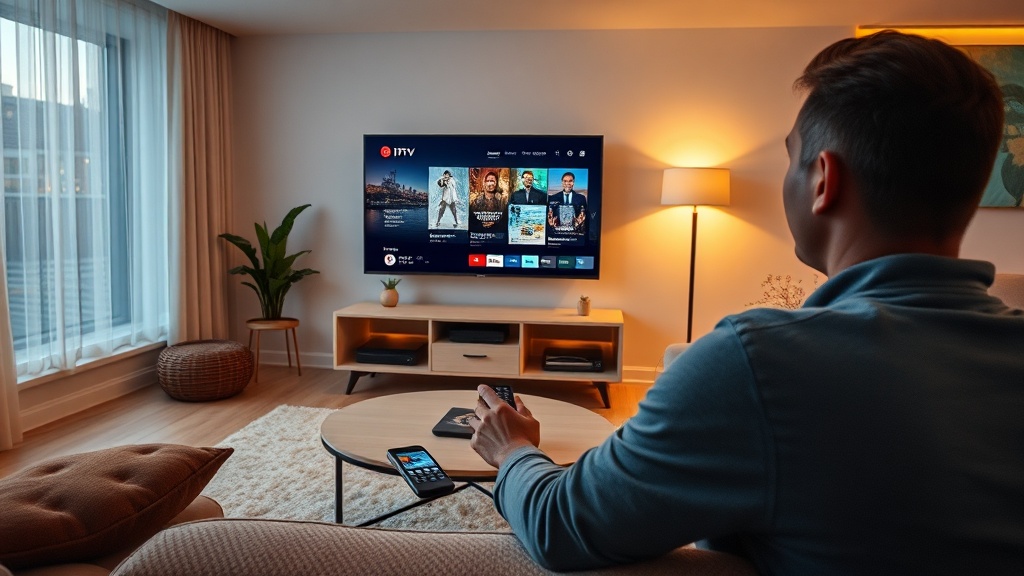
    IPTV for smart TV

    Related Articles

  • Essential IPTV for Android TV Guide 2026

    Essential IPTV for Android TV Guide 2026

    IPTV for Android TV

    IPTV for Android TV has revolutionized how we consume television, offering a vast universe of content delivered directly to your living room. In 2026, the landscape of IPTV for Android TV is more vibrant and accessible than ever, providing unparalleled choice and flexibility. This comprehensive guide will delve into everything you need to know about harnessing the power of IPTV for Android TV, from selecting the right service to optimizing your viewing experience.

    Table of ContentsUnderstanding IPTV for Android TV: What You Need to KnowChoosing the Best IPTV Service for Android TV in 2026Setting Up Your IPTV for Android TV: A Step-by-Step GuideOptimizing Your IPTV for Android TV ExperienceAdvanced Features and Troubleshooting for IPTV on Android TVThe Future of IPTV for Android TV in 2026 and BeyondFrequently Asked Questions About IPTV for Android TVRelated IPTV Services

    Gone are the days of restrictive cable packages and limited channel selections. With IPTV, or Internet Protocol Television, your favorite shows, movies, and live sports are streamed over the internet, giving you instant access to a global library of entertainment. Android TV devices, with their open-source nature and robust app ecosystem, are the perfect companions for this modern viewing paradigm. Whether you’re a seasoned streaming enthusiast or new to the world of internet television, understanding the nuances of IPTV on your Android TV will unlock a world of possibilities.

    The year 2026 brings with it advancements in streaming technology, higher bandwidth availability, and an even broader array of content providers. This means a smoother, more reliable, and more diverse IPTV experience for Android TV users. From crystal-clear 4K streams to interactive features and personalized recommendations, the future of television is undoubtedly intertwined with this powerful combination.

    Throughout this guide, we’ll explore the benefits, setup processes, best practices, and troubleshooting tips to ensure you get the most out of your IPTV for Android TV experience. Prepare to transform your entertainment setup and embrace the future of television with confidence.

    Understanding IPTV for Android TV: What You Need to Know

    Before diving into the specifics, it’s crucial to grasp the fundamental concepts behind IPTV and how it integrates with your Android TV device. IPTV essentially delivers television content using the internet protocol suite over a packet-switched network, rather than traditional terrestrial, satellite, or cable formats. This method offers significant advantages, including on-demand content, time-shifted television, and live programming, all accessible through your internet connection.

    Android TV, powered by Google’s Android operating system, is designed for smart TVs and media players. It offers a user-friendly interface, access to the Google Play Store for a plethora of apps, and seamless integration with other Google services. When you combine IPTV with Android TV, you create a powerful media hub capable of delivering an almost limitless amount of content directly to your television.

    The beauty of this synergy lies in the flexibility it offers. You’re not tied to specific hardware provided by a cable company; instead, you can choose from a range of Android TV boxes, dongles, or even smart TVs with built-in Android TV. This open ecosystem allows for greater customization and control over your viewing experience, making IPTV for Android TV a highly attractive option for modern consumers.

    Understanding the architecture, from your internet service provider (ISP) to your Android TV device and the IPTV application, is key to optimizing your setup. A stable and fast internet connection is paramount, as is selecting a reliable IPTV provider. We’ll explore these aspects in more detail to help you build a robust and enjoyable streaming environment for your IPTV for Android TV setup.

    Choosing the Best IPTV Service for Android TV in 2026

    The market for IPTV services is vast and ever-growing, making the selection process a critical step in setting up your IPTV for Android TV. In 2026, you’ll encounter numerous providers, each offering different channel lineups, pricing models, and features. Making an informed decision is essential for a satisfying viewing experience.

    When evaluating IPTV providers, consider several key factors. First, look at the channel selection. Do they offer the channels you want, including local broadcasts, international content, sports, and movies? Many providers specialize in certain niches, so align your choice with your viewing preferences. You can often find a detailed list of available channels on a provider’s website, such as checking out the IPTV Put channels page.

    Next, consider the streaming quality and reliability. Do they offer high-definition (HD) and 4K content? Are their servers stable, minimizing buffering and downtime? Reading reviews and trying out free trials (if available) can provide valuable insights into a service’s performance. Customer support is another important aspect; reliable assistance can be invaluable if you encounter any issues with your IPTV for Android TV setup.

    Pricing is, of course, a significant factor. IPTV services typically offer monthly, quarterly, or annual subscription plans. Compare the costs and features to find a plan that fits your budget and needs. Remember that cheaper isn’t always better; sometimes, a slightly higher price can guarantee better quality and more reliable service. For an idea of typical costs, you might want to review IPTV Put’s pricing plans.

    Finally, check for compatibility with Android TV. While most modern IPTV services are designed to work seamlessly with Android devices, it’s always good to confirm. Some providers even offer their own dedicated Android TV applications, which can simplify the setup and usage. By carefully considering these factors, you can select the best IPTV service to complement your Android TV device.

    Setting Up Your IPTV for Android TV: A Step-by-Step Guide

    IPTV for Android TV

    Once you’ve chosen your preferred IPTV service, the next step is to set it up on your Android TV device. The process is generally straightforward, but it involves a few key stages. This section will walk you through the essential steps to get your IPTV for Android TV up and running smoothly.

    First, ensure your Android TV device is connected to a stable internet connection. A wired Ethernet connection is often preferred for optimal performance, especially for 4K streaming, but a strong Wi-Fi signal can also suffice. Navigate to the Google Play Store on your Android TV. This is where you’ll download the necessary IPTV player applications. While some IPTV providers offer their own apps, many users opt for third-party players due to their advanced features and flexibility.

    Popular IPTV player applications for Android TV include applications like “Smart IPTV,” “TiviMate,” “Perfect Player,” and “VLC.” Search for your chosen player in the Play Store, download, and install it. Once installed, open the application. You will typically be prompted to add a playlist or subscription. This is where you’ll input the M3U URL or Xtream Codes API credentials provided by your IPTV service provider. These details are crucial for the player to access the content from your subscription.

    Follow the on-screen instructions within the IPTV player to add your playlist. This usually involves pasting the M3U URL or entering the server URL, username, and password for Xtream Codes. After successfully adding your playlist, the application will typically load the channels and EPG (Electronic Program Guide). You might need to adjust some settings within the player, such as aspect ratio, audio tracks, or buffering options, to optimize your viewing experience. With these steps completed, your IPTV for Android TV setup should be ready for action.

    Optimizing Your IPTV for Android TV Experience

    Setting up your IPTV for Android TV is just the beginning. To truly unlock its potential, you’ll want to optimize your viewing experience. This involves a combination of hardware considerations, software configurations, and best practices that can significantly enhance stream quality and reliability.

    One of the most critical factors is your internet connection. A fast and stable broadband connection is non-negotiable for high-quality IPTV streaming. For 4K content, a minimum speed of 25 Mbps is often recommended, though higher speeds provide a better buffer against network fluctuations. Consider upgrading your internet plan if you frequently experience buffering or low-resolution streams. Using a VPN can also be beneficial, not just for privacy and security, but also to bypass potential ISP throttling, which can impact your IPTV for Android TV performance.

    Next, ensure your Android TV device is performing optimally. Close any unnecessary background applications that might be consuming resources. Regularly clear the cache of your IPTV player app and even the Android TV system itself. This can prevent slowdowns and improve responsiveness. For users looking for specific device recommendations, you can find information on compatible devices on sites like IPTV Put’s devices page.

    Within your IPTV player application, explore the settings. Many players offer options to adjust buffer size, video decoder types, and even refresh rates. Experiment with these settings to find the configuration that works best for your specific device and internet connection. For example, some devices perform better with hardware decoding, while others might benefit from software decoding. Keeping your Android TV’s firmware and all installed apps updated is also crucial for performance and security.

    Finally, consider using a high-quality HDMI cable for connecting your Android TV box to your television, especially if you’re streaming 4K content. While often overlooked, a poor-quality cable can sometimes introduce signal degradation. By paying attention to these details, you can elevate your IPTV for Android TV experience from good to outstanding.

    Advanced Features and Troubleshooting for IPTV on Android TV

    As you become more familiar with your IPTV for Android TV setup, you might want to explore advanced features or tackle common troubleshooting issues. Modern IPTV players offer a wealth of functionalities that can enrich your viewing, while knowing how to resolve problems ensures uninterrupted entertainment.

    Many advanced IPTV players support features like EPG customization, allowing you to tailor the look and feel of your program guide. Some even offer catch-up TV, enabling you to watch programs that aired days or weeks ago. Recording capabilities are also becoming more common, letting you record live shows to watch later. Explore the settings of your chosen IPTV app to discover these powerful features. Integrating with external media players like MX Player or VLC can also enhance playback options, especially for certain codecs or file formats.

    Troubleshooting is an inevitable part of any streaming setup. If you encounter buffering, the first step is often to check your internet connection. Run a speed test on your Android TV device. If speeds are low, try restarting your router and modem. If the problem persists, contact your ISP. Another common issue is channels not loading. This could be due to an expired subscription, server issues on the provider’s end, or an incorrect M3U URL. Double-check your subscription details and contact your IPTV provider if necessary.

    Sometimes, clearing the cache of your IPTV app or even reinstalling it can resolve stubborn issues. If your Android TV device itself is acting up, a simple restart can often fix minor glitches. For more complex problems, performing a factory reset on your Android TV device might be an option, but remember this will erase all your installed apps and settings. By understanding these advanced features and troubleshooting techniques, you can maintain a robust and enjoyable IPTV for Android TV experience.

    The Future of IPTV for Android TV in 2026 and Beyond

    The landscape of television consumption is constantly evolving, and IPTV for Android TV is at the forefront of this transformation. As we look ahead to 2026 and beyond, several trends are poised to shape the future of this powerful combination, promising even more immersive and personalized entertainment experiences.

    One significant trend is the continued improvement in streaming quality. With 8K televisions becoming more accessible, IPTV providers will likely push for higher resolution content, demanding faster internet speeds and more efficient compression technologies. The integration of AI and machine learning will also play a crucial role, allowing for more sophisticated content recommendations, personalized user interfaces, and even adaptive streaming that adjusts quality based on network conditions in real-time. This means your IPTV for Android TV experience will become even smarter and more tailored to your preferences.

    Interactivity is another area set for growth. Imagine being able to vote on reality shows directly through your IPTV app, access real-time statistics during a live sports event, or participate in polls related to the content you’re watching. Gamification elements and enhanced social features could also become more commonplace, transforming passive viewing into an engaging, interactive experience. The open nature of Android TV makes it an ideal platform for these kinds of innovations.

    Moreover, the convergence of various streaming services into unified platforms will likely simplify content discovery. Instead of switching between multiple apps, your IPTV for Android TV interface could become a central hub for all your subscriptions, including traditional IPTV, VOD services, and even gaming platforms. This seamless integration will offer unparalleled convenience and choice.

    The ongoing development of 5G networks and satellite internet will further boost the reliability and accessibility of IPTV, especially in areas with limited broadband infrastructure. This expanded reach will bring the benefits of IPTV for Android TV to an even wider audience, solidifying its position as a dominant force in the future of home entertainment.

    Frequently Asked Questions About IPTV for Android TV

    What is IPTV for Android TV?

    IPTV for Android TV refers to the delivery of television content over the internet protocol network, viewed on an Android TV-powered device. This allows users to stream live TV channels, on-demand movies, and TV shows using an internet connection, rather than traditional cable or satellite broadcasts. Android TV devices, such as smart TVs or set-top boxes, provide the platform for accessing IPTV services via dedicated apps.

    Do I need a special Android TV box for IPTV?

    Not necessarily a “special” one, but you do need an Android TV device. This could be a smart TV with Android TV built-in, an Android TV box (like an NVIDIA Shield TV or Google Chromecast with Google TV), or an Android TV stick. The key is that the device runs the Android TV operating system, allowing you to download IPTV player apps from the Google Play Store.

    Is IPTV legal for Android TV?

    The legality of IPTV depends on the service provider. Subscribing to legitimate IPTV services that have proper licensing for the content they offer is legal. However, using services that illegally broadcast copyrighted content without authorization is not legal. Always ensure your chosen IPTV provider is reputable and operates within legal frameworks.

    What internet speed do I need for IPTV on Android TV?

    For standard definition (SD) content, about 5-10 Mbps is usually sufficient. For high-definition (HD) content, 10-20 Mbps is recommended. If you plan to stream 4K Ultra HD content, you’ll ideally need a stable internet connection of 25 Mbps or higher. A faster and more stable connection will always result in a better, buffer-free viewing experience for your IPTV for Android TV.

    Can I record shows with IPTV on Android TV?

    Yes, many modern IPTV player applications for Android TV offer recording capabilities. This feature often allows you to schedule recordings of live TV shows or record current programs. However, the availability and functionality of recording will depend on both your IPTV player app and your specific IPTV service provider. Some providers may offer cloud-based recording, while others rely on local storage on your Android TV device or an attached USB drive.

    You may also visit the following websites for similar services:
    IPTV for Android TV

    Related Articles